Seven experiments in belonging, from symbolic nations to digital services and citizenship beyond Earth.
Before Post-Nations
Post-Nations began with experiments that already existed. Symbolic states, micronations, cultural citizenship projects and digital services were testing different relationships between a person and an institution. Some offered satire or a shared ideal; others provided an administrative service or made a claim to territory. Their differences matter. They do not form one political movement or offer the same rights.
Read together, they trace a useful sequence: a place can be declared a territory, a name can gather a people, and a practice or historical narrative can become an invitation to belong. Digital membership takes the sequence toward an affiliation that can precede arrival. These experiments also show how attempts to move beyond the nation-state can retain its titles, symbols, hierarchies and idealized accounts of identity.
Sealand: a physical place and a claim
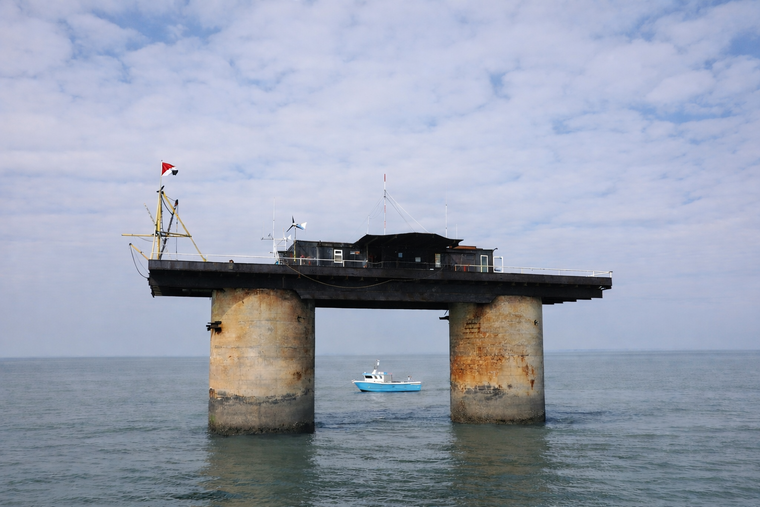
Sealand begins with a physical place. Its own history dates the declaration to 1967 and describes the occupation of Roughs Tower, a former sea fort. The original notes considered this micronation an experiment in independence and territorial sovereignty in international waters. The fort, declaration and institutional account provide tangible evidence of a claim; recognition by other authorities is a further question.
Here a place precedes the interface. Occupation, naming and repeated sovereign symbols turn the fort into a proposed territory, reversing projects that gather a digital community first and imagine its home later. Post-Nations keeps that distinction visible in its atlas and membership records: a physical address does not by itself guarantee entry, residence or protection.
 DOCUMENTARY IMAGEA place, a declaration, a claim
Sources & context
Institution’s own accountPrincipality of Sealand / historyThe institution’s account of Roughs Tower and its declaration.↗A nation begins to address its people
From a place that declares itself a state, the sequence moves to the signs through which a state becomes imaginable. A flag, a passport or a sovereign title can address a people before an institution has the power to secure recognition. Nowheristan and Klinkistan approach this through different kinds of performance: one proposes a borderless political arrangement; the other draws a kingdom around a public persona.
Nowheristan: an empire without a place on the map
Michel Elefteriades presents Nowheristan as a stateless entity, with himself as “Emperor Michel I.” The original project notes read it as a critique of the inefficiencies and constraints of nation-states and an invitation to a global, borderless identity. In an interview published by Daily News Egypt, Elefteriades describes constitutions, passports, senators and participation across existing countries. The report documents his proposed arrangement and ambitions; it does not establish internationally recognized sovereignty.
Here the performance is also an argument. Naming the empire and issuing its signs make a political community conceivable. Borderlessness still leaves the question of who decides within it. That tension carries into Post-Nations whenever an issuer recognizes a person on screen while a territorial authority can refuse that person at a border.
Sources & context
Reported interviewDeena Douara / Daily News EgyptThe founder’s account of the project and its proposed political structure.↗Klinkistan: a public persona and a people
Klinkistan brings the claim closer to the individual. In her August 2016 interview for L’Orient-Le Jour, Ornella Antar describes Myriam Klink’s kingdom, its pink national colour and its flag. Klink identifies personal freedom as her cause. The original project notes interpreted its symbolic citizenship as a playful commentary on identity and governance. The interview documents the named kingdom and visual identity, without establishing a state-recognized citizenship programme; the name’s appearance in Klink’s music catalogue is a separate record of its use.
An audience can be addressed as a people, and a persona can acquire loyalty and the vocabulary of a polity. Humour, self-presentation and authority meet in the same image. This gives Klinkistan its own place in the research: it raises the question of why a visitor recognizes an issuer before inspecting what that recognition provides.
Sources & context
Interview / 25 August 2016Ornella Antar / L’Orient-Le JourAn interview documenting Klinkistan, its pink identity and the artist’s account of personal freedom.↗Catalogue recordMyriam Klink / Klinkistan on Apple MusicDocuments the name’s use in the artist’s catalogue; not evidence of citizenship issuance.↗ DOCUMENTARY IMAGEAn empire with no place on the map


 DOCUMENTARY IMAGEThe public persona as a territory

When a sign of authority begins to act
Sealand, Nowheristan and Klinkistan approach the signs of authority from different positions: an occupied place, a proposed borderless arrangement and a public persona. A shared vocabulary of flags, titles and documents does not make their motives equivalent. It raises a question that continues through the other examples: at what point does a sign of authority begin to behave like authority?
Global Country of World Peace: a shared practice
A community can also take national form around a practice. Created by Maharishi Mahesh Yogi, the Global Country of World Peace dates its founding to 2000 in its own account. It describes itself as non-political and non-religious, connects its activity to Transcendental Meditation, and works through a worldwide network of affiliated institutions. These are the organization’s self-descriptions, not evidence here of territorial sovereignty.
The original notes focused on symbolic citizenship aligned with world peace and transcendental meditation. Its relevance is the use of a country’s form for a shared worldview, sustained through institutions and affiliation across places. It broadens the research beyond commercial or technological membership: faith, practice and collective purpose can also provide a basis for belonging.
Sources & context
Organization’s own accountGlobal Country of World Peace / About usFounding, purpose and the organization’s description of its domain.↗History becomes an invitation to belong
Historical and cultural narratives can perform similar work. They invite people to identify across present borders while drawing on a particular account of the past. Such affiliations can challenge modern national boundaries and still reproduce a nation-like identity. Cultural identification, descent, political ideology and legally recognized nationality remain different relationships, even when the language of citizenship brings them together.
Phoenicia Verse: historical continuity in the present
On 10 January 2025, Karim El Koussa introduced Phoenicia Verse in a public Facebook post, identifying himself as a co-founder alongside Tamer Ziade and others. He linked the platform and invited visitors to claim virtual “Phoenician Citizenship.” This announcement is direct evidence of the initiative and its language of membership. It describes a cultural platform; it does not establish a state-issued nationality or a right to enter Lebanon.
The original notes understood this invitation as a reclamation of Phoenician identity through cultural pride and historical continuity. The historical study linked below provides a separate account of ancient Phoenician migration and citizenship. In the fiction, Levnon develops the contemporary tension through Lebanese Phoenician heritage, diaspora chapters and custodial places: a historical claim can organize a community while identity, authority and access remain contested.
Sources & context
Primary source / 10 January 2025Karim El Koussa / public Facebook announcementIntroduces Phoenicia Verse, names co-founders and invites virtual citizenship. Public post inspected directly.↗Project websitePhoenicia VersePlatform linked by the founder. The Facebook announcement is the verified source for the account above.↗Historical contextDenise Demetriou / Harvard Center for Hellenic StudiesA separate historical study of ancient Phoenician migration and citizenship.↗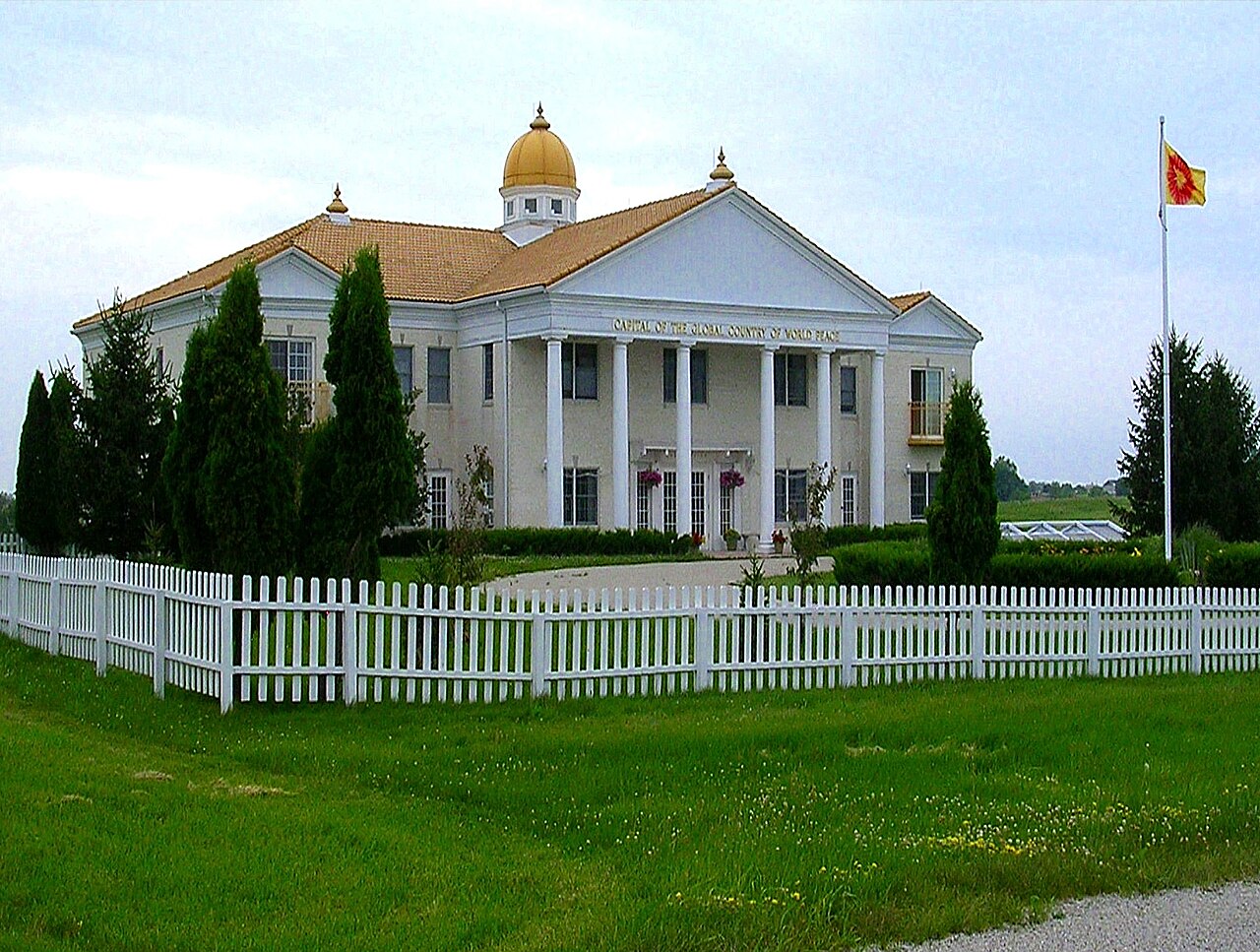 DOCUMENTARY IMAGEA country defined through consciousness


 SOURCE GRAPHICHistorical identity as a present affiliation
What a digital membership provides
Online affiliation makes the distance between membership and practical entitlement especially visible. The original notes also considered websites offering virtual citizenship with no tangible benefits: symbolic participation could become a playful critique of citizenship, or a way to turn identity into a commodity. Estonia offers a more precise administrative comparison because its digital credential has a defined use.
Estonian e-Residency: a defined service boundary
Estonia’s official definition separates e-Residency from citizenship, tax residency and physical residency. The programme provides digital identification for access to e-services, including establishing and administering a business remotely. It is an administrative service of an existing state, with a boundary that its name can obscure.
A credential can be official, useful and verifiable while providing less than a reader might expect from the word residency. Post-Nations extends this separation across its interface. Identity, membership, land access, residence and protection have independent conditions; acceptance by one system does not settle the others.
 DOCUMENTARY IMAGEDigital access without territorial admission
Sources & context
Programme definitionEstonia e-Residency / What is e-Residency?Defines the programme and explicitly identifies what it does not confer.↗Asgardia: affiliation before arrival
Asgardia carries the sequence toward an imagined destination. It presents itself as a space nation, with official materials describing political institutions and space citizenship. Its constitution sets out that institutional claim. It does not itself establish an inhabited extraterrestrial territory or a member’s ability to travel there. The mission report and launch photograph below document Asgardia-1’s journey aboard Cygnus in November 2017.
The original notes approached Asgardia through both digital membership and a cultural vision of humanity’s expansion into space. A community can gather around technological and utopian ideals, with a post-Earth identity, while remaining organized through familiar national forms. Institutions and affiliation can arrive before a place is available to the people who join.
Sources & context
Mission report / 14 November 2017Asgardia-1 aboard CygnusContemporary report of the spacecraft carrying Asgardia-1 to the International Space Station.↗Project’s own accountAsgardia / About usThe project’s self-description and ambitions.↗Primary documentAsgardia / ConstitutionThe published institutional framework, including space citizenship.↗From Asgardia to the fictional Syntis Nova
Syntis Nova turns that distance into an administrative condition within Post-Nations. Civil affiliation, transport and habitation operate as separate systems. Membership can be recognized long before a berth, a journey or living space is available. The question carried into the artwork is whether citizenship can reach a place before its citizens can live there.
 DOCUMENTARY IMAGEAn institution before a destination


What carries into the fiction
Four recurring characteristics shaped Post-Nations: symbolic citizenship that emphasizes affiliation; critiques of the exclusions or limits of existing states; a continued attachment to nationalist or idealized narratives; and experiments with governance, territory or digital organization. These are overlapping tendencies, not a classification that makes every example equivalent.
The precedents express dissatisfaction with existing arrangements and interest in other ways to organize belonging. They also reveal the difficulty of moving beyond the nation-state. A symbolic gesture can produce a community without securing practical rights, and an alternative institution can retain the hierarchies it set out to question.
Post-Nations takes these tensions into a world of overlapping, sometimes incompatible citizenship systems. Inherited identities and territories persist alongside institutions and new memberships based on culture, faith, welfare, investment or subscription. No common authority can guarantee that one institution’s recognition will be accepted by another. The fiction asks visitors to encounter that gap through the ordinary acts of reading an offer, registering and seeking access.