Alex developed Post-Nations as a web-based conceptual artwork. Its fictional institutions make recognition, entry and residence separate questions, asking what belonging offers and what it demands.
The work unfolds through fictional citizenship records, services, rules and reports. Visitors follow how the institutions’ promises affect the people inside their systems.
The ideas behind the fictional institution, in the artist’s words.
Lived experience
My experience in the citizenship-by-investment industry exposed a gap between the rhetoric of nationhood and the ways citizenship is allocated. Wealth and technical skills can determine access to a system that describes itself through cultural or ethnic ties. Post-Nations grew from my interest in that gap and in the structures of belonging already taking shape beyond traditional nationalism.
Nationhood in transition
Nation-states remain central to cultural identity and international relations, while globalization, technology and individual mobility reshape how they operate. I do not propose Post-Nations as inherently better or worse. I am exploring a world that already hints at post-national realities without fully acknowledging them in its language.
Systems of cooperation
The Concord for Post-National Cooperation and Understanding (CPCU) brings the question into an institution attempting to coordinate other institutions. Birthright and inherited identities persist alongside permanent affiliations, ideological communities and transactional memberships. Citizenship, access and protection follow different arrangements, and cooperation must contend with those differences.
The question of belonging
The project asks how we navigate belonging when inherited structures meet newer forms of membership and governance. The nation-state remains part of that world. I am interested in the points where connection and fragmentation coexist, and where a familiar promise of recognition encounters an authority that does not share it.
Alex DahdahArtist · Post-Nations
Visual identity
The emblems, flags and maps that give the fictional institutions their visual language.
Enter through the service. Leave with the question.
Post-Nations uses the ordinary language of administration to imagine overlapping citizenships, permissions and obligations. This page follows the artist’s questions, the research behind the institutions and the decisions that give the fiction its form.
Visual identity
The emblems, flags and movements that give the fictional institutions their authority.
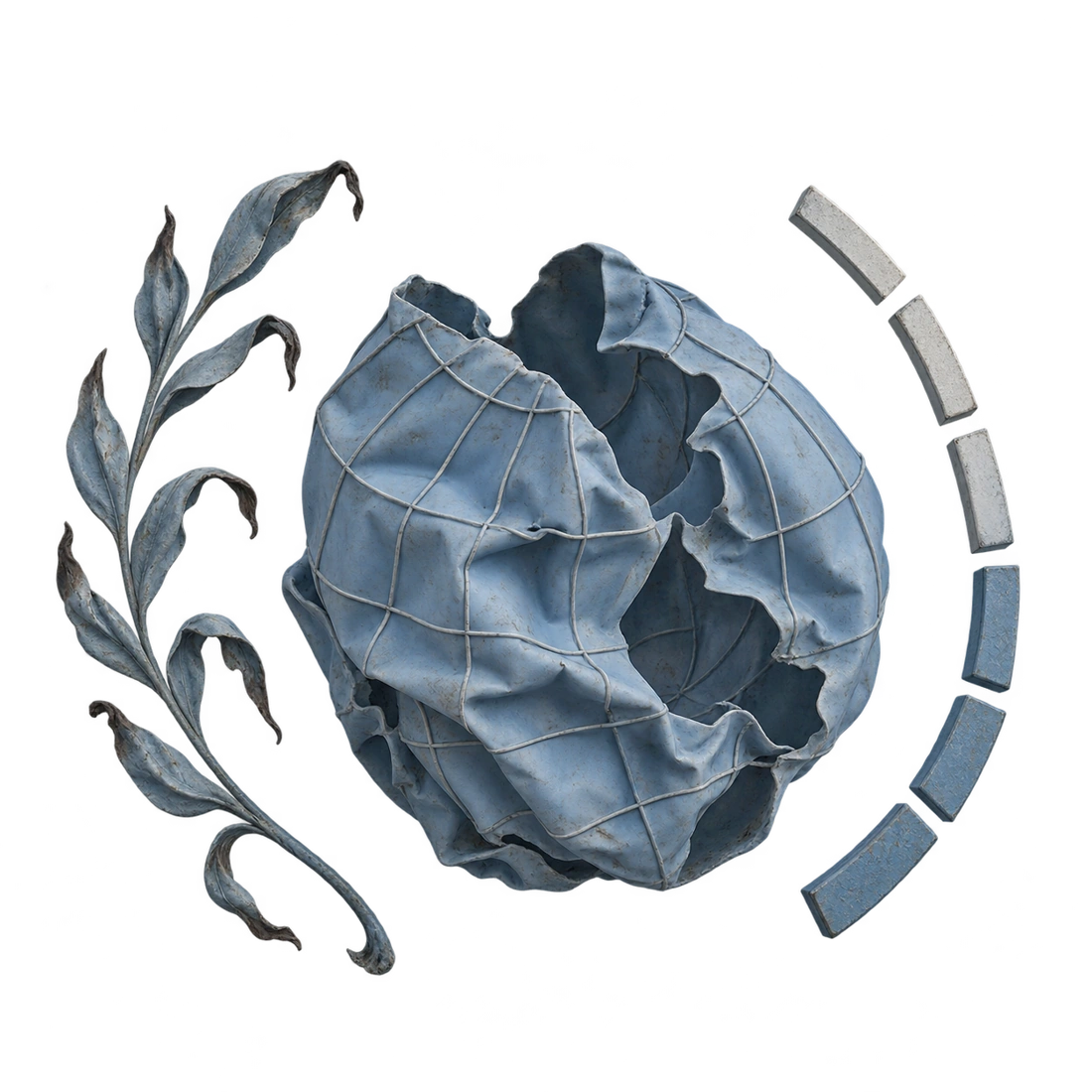
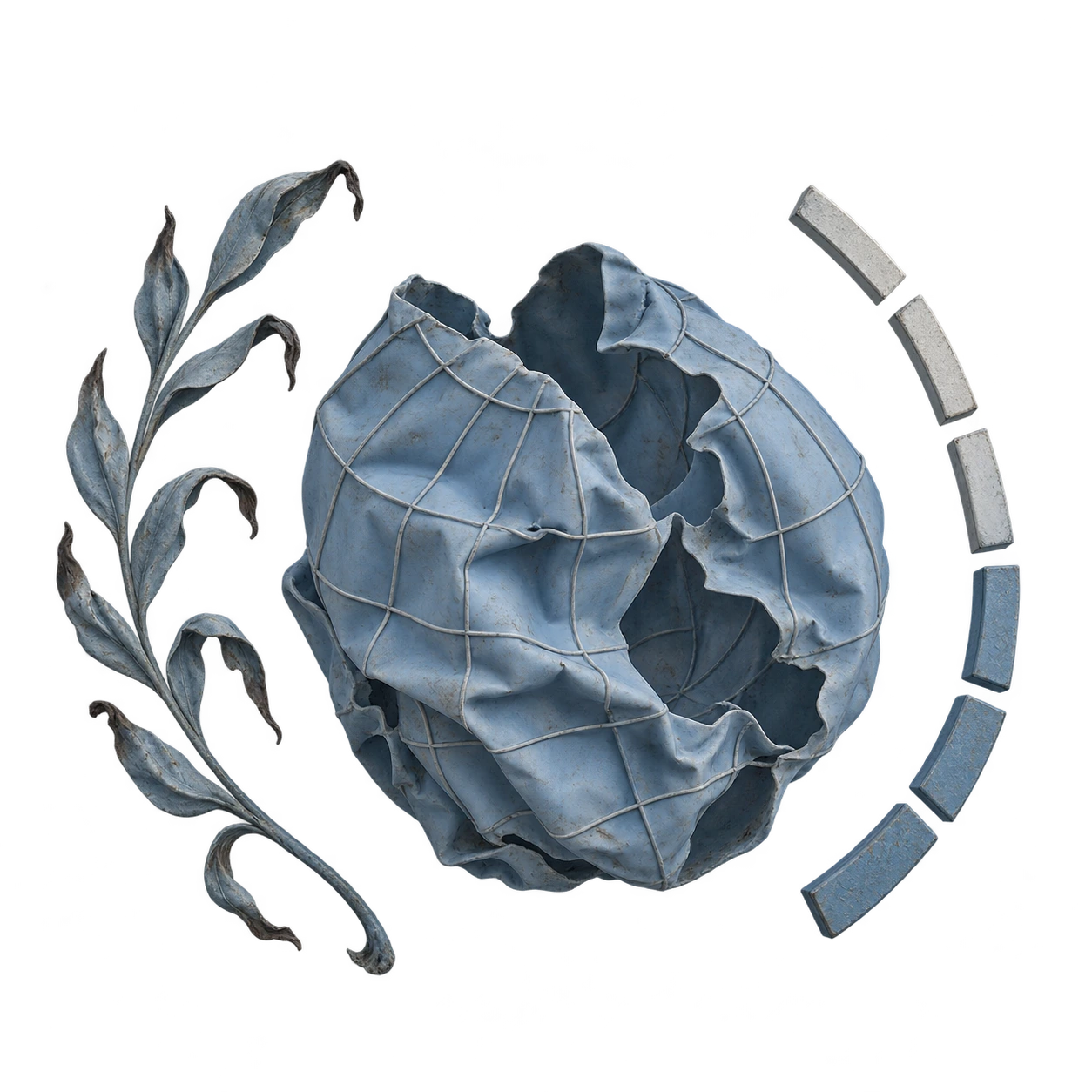
Coordination pending / a world shell, a withered branch, an unfinished loading sequence. Post-Nations / sculptural identity study, 2026.
A promise that cannot complete.
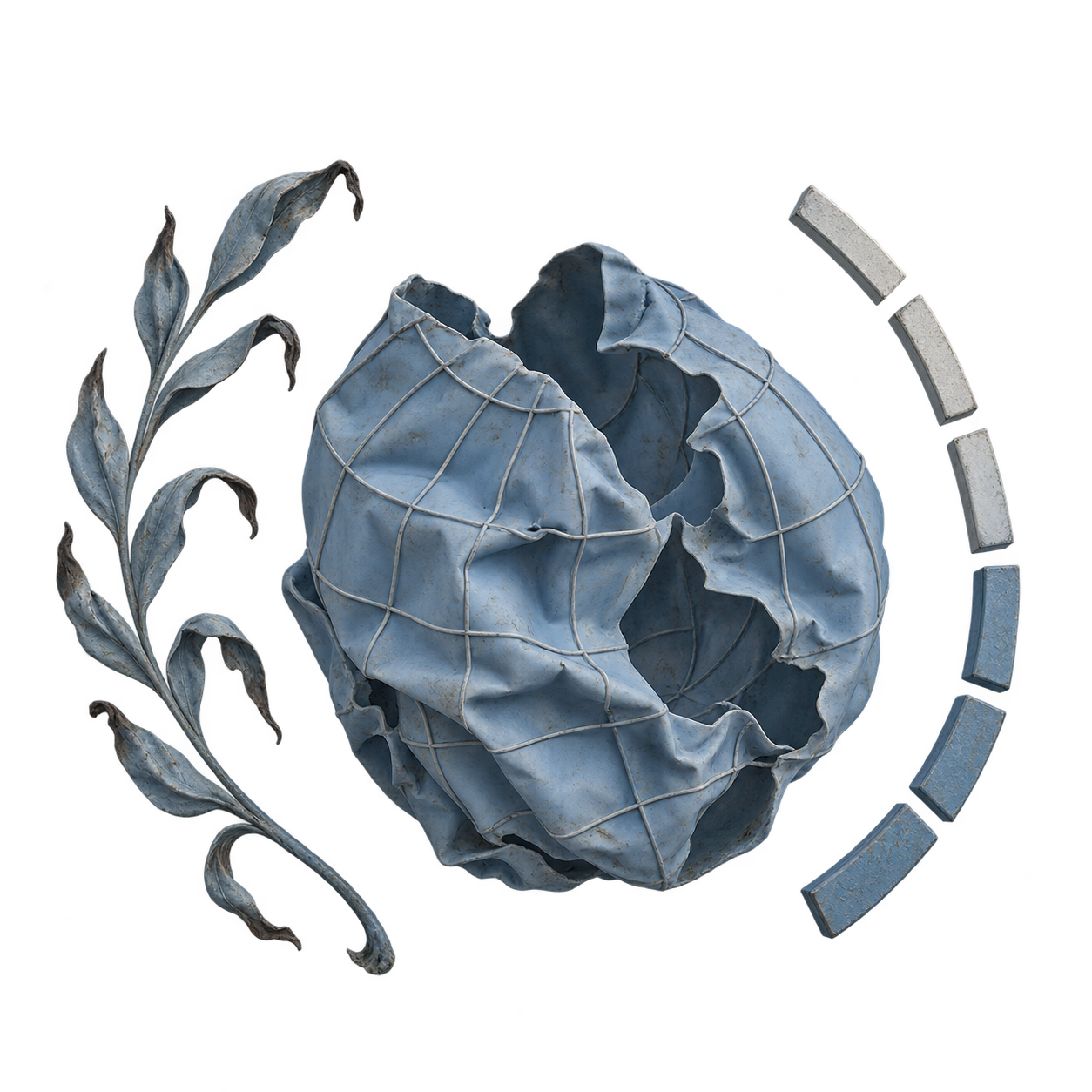
The world seal borrows the visual memory of international coordination. Its globe has buckled into a crumpled shell. One branch withers while the other becomes a loading sequence that never completes. A familiar promise of unity survives in a structure that can no longer close.
What remains of a collective institution when its members retain the symbols and withdraw the obligation?
Emblem, standard, issuing authority.
Each postnation has an animated emblem and a separate flag. The emblem expresses its governing idea; the flag presents that idea as an official standard. Their movements repeat with the quiet insistence of systems that expect to continue.
A map without promised territory.
The world atlas separates physical presence, affiliation and permission. Its administrative locations are authored schematic positions, not claims about real sovereignty. Off-world, non-territorial and withheld records deliberately have no Earth marker.
The underlying land geometry is public-domain Natural Earth map data. The institutional networks and access classifications belong to the fiction.
Research & references
Six connected readings on the precedents, political conditions and cultural practices behind Post-Nations. Real sources and invented institutions remain identified within each comparison.
No matching research. Try another name or subject.
No articles match. Try a place, institution or another subject.
Seven experiments in belonging, from symbolic nations to digital services and citizenship beyond Earth.
Before Post-Nations
Post-Nations began with experiments that already existed. Symbolic states, micronations, cultural citizenship projects and digital services were testing different relationships between a person and an institution. Some offered satire or a shared ideal; others provided an administrative service or made a claim to territory. Their differences matter. They do not form one political movement or offer the same rights.
Read together, they trace a useful sequence: a place can be declared a territory, a name can gather a people, and a practice or historical narrative can become an invitation to belong. Digital membership takes the sequence toward an affiliation that can precede arrival. These experiments also show how attempts to move beyond the nation-state can retain its titles, symbols, hierarchies and idealized accounts of identity.
Sealand: a physical place and a claim
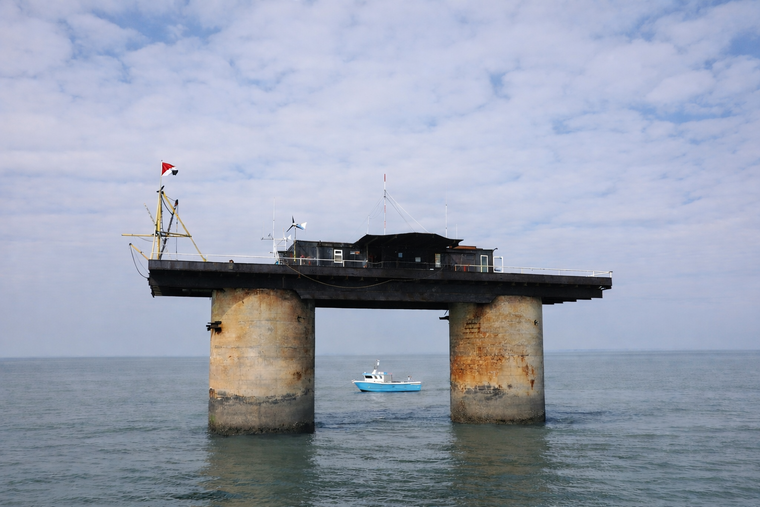
Sealand begins with a physical place. Its own history dates the declaration to 1967 and describes the occupation of Roughs Tower, a former sea fort. The original notes considered this micronation an experiment in independence and territorial sovereignty in international waters. The fort, declaration and institutional account provide tangible evidence of a claim; recognition by other authorities is a further question.
Here a place precedes the interface. Occupation, naming and repeated sovereign symbols turn the fort into a proposed territory, reversing projects that gather a digital community first and imagine its home later. Post-Nations keeps that distinction visible in its atlas and membership records: a physical address does not by itself guarantee entry, residence or protection.
DOCUMENTARY IMAGEA place, a declaration, a claim
Roughs Tower / image published by the Principality of Sealand. Companion diagram: editorial illustration, not an official symbol.Principality of Sealand ↗ · Publisher image / existing research asset
From a place that declares itself a state, the sequence moves to the signs through which a state becomes imaginable. A flag, a passport or a sovereign title can address a people before an institution has the power to secure recognition. Nowheristan and Klinkistan approach this through different kinds of performance: one proposes a borderless political arrangement; the other draws a kingdom around a public persona.
Nowheristan: an empire without a place on the map
Michel Elefteriades presents Nowheristan as a stateless entity, with himself as “Emperor Michel I.” The original project notes read it as a critique of the inefficiencies and constraints of nation-states and an invitation to a global, borderless identity. In an interview published by Daily News Egypt, Elefteriades describes constitutions, passports, senators and participation across existing countries. The report documents his proposed arrangement and ambitions; it does not establish internationally recognized sovereignty.
Here the performance is also an argument. Naming the empire and issuing its signs make a political community conceivable. Borderlessness still leaves the question of who decides within it. That tension carries into Post-Nations whenever an issuer recognizes a person on screen while a territorial authority can refuse that person at a border.
Klinkistan brings the claim closer to the individual. In her August 2016 interview for L’Orient-Le Jour, Ornella Antar describes Myriam Klink’s kingdom, its pink national colour and its flag. Klink identifies personal freedom as her cause. The original project notes interpreted its symbolic citizenship as a playful commentary on identity and governance. The interview documents the named kingdom and visual identity, without establishing a state-recognized citizenship programme; the name’s appearance in Klink’s music catalogue is a separate record of its use.
An audience can be addressed as a people, and a persona can acquire loyalty and the vocabulary of a polity. Humour, self-presentation and authority meet in the same image. This gives Klinkistan its own place in the research: it raises the question of why a visitor recognizes an issuer before inspecting what that recognition provides.
DOCUMENTARY IMAGEAn empire with no place on the map
Michel Elefteriades during a television production, 16 April 2006. Photograph by Bahaab. Companion diagram: editorial illustration, not an official symbol.Bahaab / Wikimedia Commons ↗ · Public domain
DOCUMENTARY IMAGEThe public persona as a territory
Myriam Klink in The Mask, directed by Elie Daoud, November 2020. A music-video frame; not a citizenship document. Companion diagram: editorial illustration, not an official symbol.Elie Daoud Official / Wikimedia Commons ↗ · CC BY 3.0
When a sign of authority begins to act
Sealand, Nowheristan and Klinkistan approach the signs of authority from different positions: an occupied place, a proposed borderless arrangement and a public persona. A shared vocabulary of flags, titles and documents does not make their motives equivalent. It raises a question that continues through the other examples: at what point does a sign of authority begin to behave like authority?
Seal, document, recognition / conceptual diagram by Alex Dahdah.
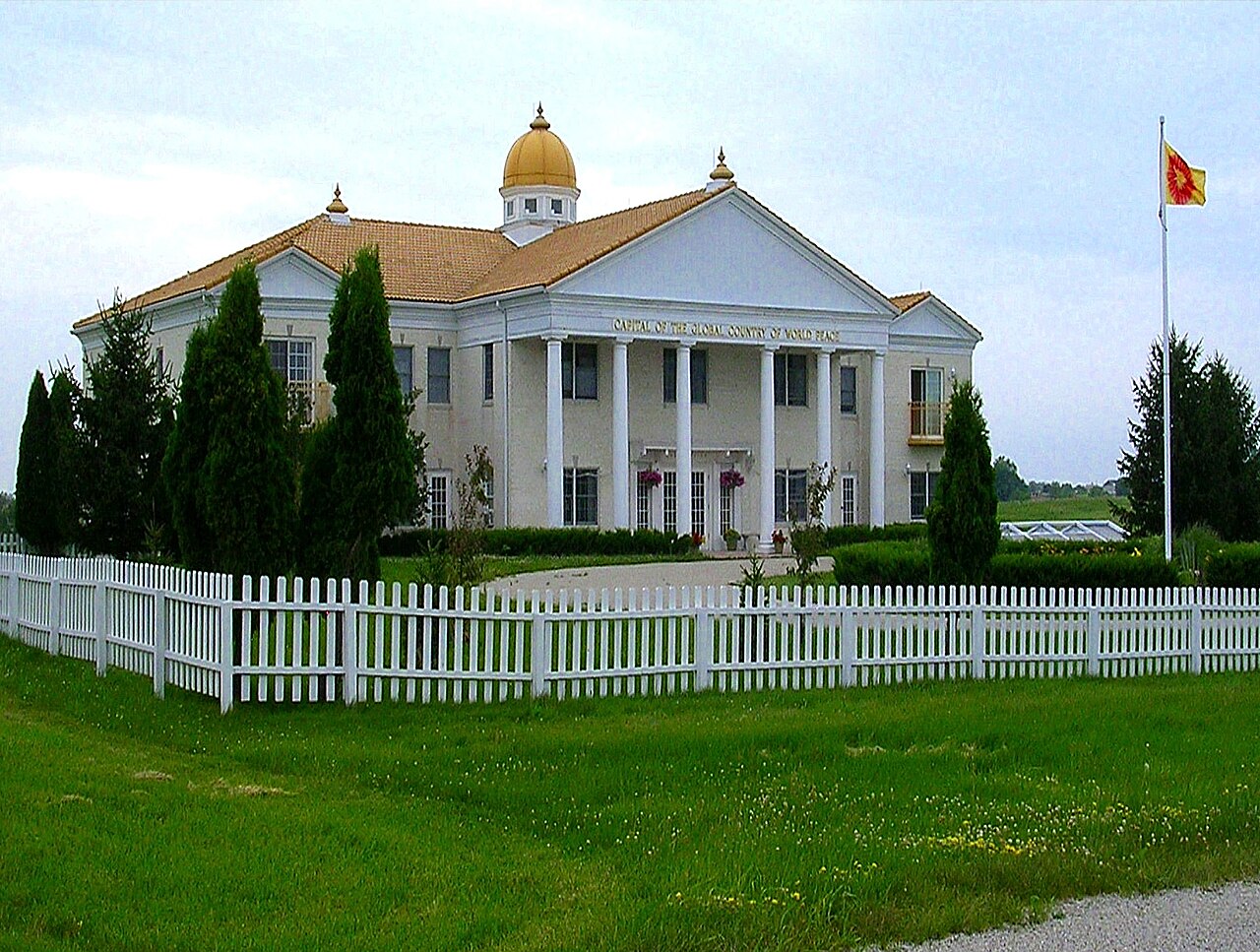
Global Country of World Peace: a shared practice
A community can also take national form around a practice. Created by Maharishi Mahesh Yogi, the Global Country of World Peace dates its founding to 2000 in its own account. It describes itself as non-political and non-religious, connects its activity to Transcendental Meditation, and works through a worldwide network of affiliated institutions. These are the organization’s self-descriptions, not evidence here of territorial sovereignty.
The original notes focused on symbolic citizenship aligned with world peace and transcendental meditation. Its relevance is the use of a country’s form for a shared worldview, sustained through institutions and affiliation across places. It broadens the research beyond commercial or technological membership: faith, practice and collective purpose can also provide a basis for belonging.
Historical and cultural narratives can perform similar work. They invite people to identify across present borders while drawing on a particular account of the past. Such affiliations can challenge modern national boundaries and still reproduce a nation-like identity. Cultural identification, descent, political ideology and legally recognized nationality remain different relationships, even when the language of citizenship brings them together.
Phoenicia Verse: historical continuity in the present
On 10 January 2025, Karim El Koussa introduced Phoenicia Verse in a public Facebook post, identifying himself as a co-founder alongside Tamer Ziade and others. He linked the platform and invited visitors to claim virtual “Phoenician Citizenship.” This announcement is direct evidence of the initiative and its language of membership. It describes a cultural platform; it does not establish a state-issued nationality or a right to enter Lebanon.
The original notes understood this invitation as a reclamation of Phoenician identity through cultural pride and historical continuity. The historical study linked below provides a separate account of ancient Phoenician migration and citizenship. In the fiction, Levnon develops the contemporary tension through Lebanese Phoenician heritage, diaspora chapters and custodial places: a historical claim can organize a community while identity, authority and access remain contested.
DOCUMENTARY IMAGEA country defined through consciousness
Headquarters of the Global Country of World Peace in Maharishi Vedic City, Iowa. Historical photograph uploaded in 2010. Companion diagram: editorial illustration, not an official symbol.Keithbob / Wikimedia Commons ↗ · Public domain
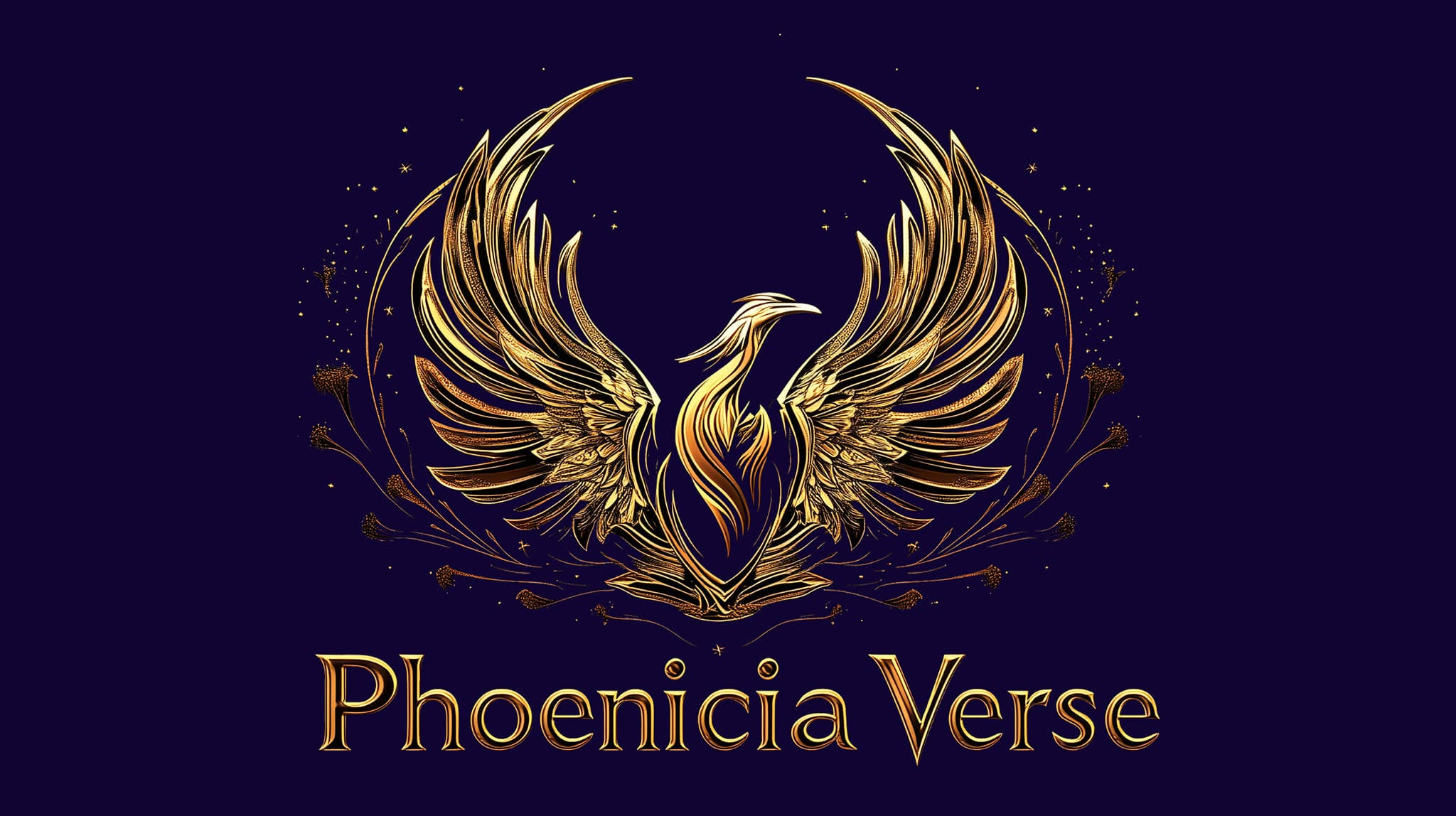
SOURCE GRAPHICHistorical identity as a present affiliation
Phoenicia Verse promotional identity, as displayed with Karim El Koussa’s public post dated 10 January 2025. Facebook labels the post “AI content”; this is a source graphic, not a photograph.Phoenicia Verse / published by Karim El Koussa ↗ · Source graphic / reproduced for identification and commentary
What a digital membership provides
Online affiliation makes the distance between membership and practical entitlement especially visible. The original notes also considered websites offering virtual citizenship with no tangible benefits: symbolic participation could become a playful critique of citizenship, or a way to turn identity into a commodity. Estonia offers a more precise administrative comparison because its digital credential has a defined use.
Estonian e-Residency: a defined service boundary
Estonia’s official definition separates e-Residency from citizenship, tax residency and physical residency. The programme provides digital identification for access to e-services, including establishing and administering a business remotely. It is an administrative service of an existing state, with a boundary that its name can obscure.
A credential can be official, useful and verifiable while providing less than a reader might expect from the word residency. Post-Nations extends this separation across its interface. Identity, membership, land access, residence and protection have independent conditions; acceptance by one system does not settle the others.
DOCUMENTARY IMAGEDigital access without territorial admission
Application guide photograph / Estonia e-Residency programme. Companion diagram: editorial illustration, not an official symbol.Estonia e-Residency ↗ · Programme image / existing research asset
Asgardia carries the sequence toward an imagined destination. It presents itself as a space nation, with official materials describing political institutions and space citizenship. Its constitution sets out that institutional claim. It does not itself establish an inhabited extraterrestrial territory or a member’s ability to travel there. The mission report and launch photograph below document Asgardia-1’s journey aboard Cygnus in November 2017.
The original notes approached Asgardia through both digital membership and a cultural vision of humanity’s expansion into space. A community can gather around technological and utopian ideals, with a post-Earth identity, while remaining organized through familiar national forms. Institutions and affiliation can arrive before a place is available to the people who join.
Syntis Nova turns that distance into an administrative condition within Post-Nations. Civil affiliation, transport and habitation operate as separate systems. Membership can be recognized long before a berth, a journey or living space is available. The question carried into the artwork is whether citizenship can reach a place before its citizens can live there.
DOCUMENTARY IMAGEAn institution before a destination
Antares / Cygnus CRS-8 launch from Wallops, Virginia, 12 November 2017. The mission carried Asgardia-1. Companion diagram: editorial illustration, not an official symbol.NASA / Bill Ingalls ↗ · Public domain (NASA)Orbital affiliation / conceptual diagram by Alex Dahdah, not a photograph of a settlement.
What carries into the fiction
Four recurring characteristics shaped Post-Nations: symbolic citizenship that emphasizes affiliation; critiques of the exclusions or limits of existing states; a continued attachment to nationalist or idealized narratives; and experiments with governance, territory or digital organization. These are overlapping tendencies, not a classification that makes every example equivalent.
The precedents express dissatisfaction with existing arrangements and interest in other ways to organize belonging. They also reveal the difficulty of moving beyond the nation-state. A symbolic gesture can produce a community without securing practical rights, and an alternative institution can retain the hierarchies it set out to question.
Post-Nations takes these tensions into a world of overlapping, sometimes incompatible citizenship systems. Inherited identities and territories persist alongside institutions and new memberships based on culture, faith, welfare, investment or subscription. No common authority can guarantee that one institution’s recognition will be accepted by another. The fiction asks visitors to encounter that gap through the ordinary acts of reading an offer, registering and seeking access.
Fictional identity from Post-Nations / not a documentary photograph.Fictional identity from Post-Nations / not a documentary photograph.Fictional identity from Post-Nations / not a documentary photograph.
Political conditions
Displacement & recognition
What survives displacement, and who can give a surviving claim practical force?
When people move, the relationships they rely on do not move on equal terms. Medical care, household evidence, work, local government and a claim to return each depend on different institutions. These cases follow that uneven continuity, from displaced communities to exile administrations and a state whose territory is threatened by rising seas.
The accessions, institutions and membership rules in these comparisons are authored for the project’s 2036 setting. They are not predictions, existing organizations, or positions attributed to the real communities and sources cited here.
When a population moves and the state does not
The opening cases distribute continuity across several kinds of institution rather than imagining one body that can stand in for every displaced person.
01 / Documented context
UNHCR’s 2024 report documents displacement linked to conflicts including Sudan, Syria and Ukraine.
Fictional emblems, arranged as a relationship diagram for the artwork.INVENTED ACCESSION / 2028
Continuum
Displaced care compact
Continuum’s 2028 compact joined displaced Ukrainian patients and clinicians with receiving hospital districts. Its first civil records were treatment transfers that no single welfare authority would keep open indefinitely. The founding hospital chamber acquired admission powers when temporary funding became a membership contribution.
Hospitals want predictable funding, patients want continuity and host governments want a limit on responsibility. The same person can be medically indispensable to one register and financially ineligible in another.
Mnemos’s 2028 union assembled duplicated Syrian household and municipal records that had travelled through incompatible authorities. Displaced clerks became custodians of a register designed to survive another change in government. The charter accepts contested evidence without declaring which claimant owns the home.
Families need a usable record before every contradiction can be resolved. Clerks who certify continuity can quietly become the authority over which version of a life survives.
Solum’s 2030 compact linked displaced farming households with return districts that needed work before cultivation could resume. Village councils retained authority over occupation histories. Restoration lenders financed access conditions against future agricultural output.
A return claimant can become indebted for making land usable before the ownership dispute is settled. The investor receives a production forecast while the household receives a pending-access notice.
Tessera’s 2032 federation connected neighbourhood councils whose residents had scattered while local service obligations remained. Delegates refused both a single exile capital and the idea that control of a checkpoint should determine the civic roll. Each district accepted only the services named in its accession schedule.
The councils need security agreements to deliver services. Those agreements can make the people controlling access more powerful than the residents represented by the charter.
Aegis’s 2028 compact grew from Sudanese civilian relief relationships that crossed lines controlled by competing armed forces. Local groups created a shared record for supply and refuge requests. Armed sponsors were denied membership in the governing assembly but retained power over physical passage.
Neutral administration still needs negotiations with armed power. The compact can preserve a civilian claim while every party controlling the road declines responsibility for delivering it.
Motus’s 2030 federation was established by displaced workers whose qualifications and employment contributions became fragmented between receiving states. Host unions secured representation on its admissions board. Staffing firms joined for access to verified labour histories.
Portability reduces the loss caused by displacement and makes the workforce easier to move again. The federation’s strongest commercial clients rarely need to relocate themselves.
Sillage’s 2031 federation linked Haitian neighbourhood and diaspora institutions seeking continuity across repeated displacement. Other Creole-speaking associations acceded through separate agreements. Shared language does not erase their different histories or give the federation authority over the Caribbean.
Diaspora finance keeps local institutions operating but can shift authority away from residents exposed to violence. The register can reward a remittance more clearly than the labour of staying.
Keystone’s 2031 federation joined receiving cities that were financing shared obligations through incompatible national systems. Resident associations gained seats alongside municipalities. The charter pools local entry and services where the city can lawfully provide them, without claiming a national immigration power.
Cities carry the cost of belonging while higher authorities retain many powers to grant it. A common card can conceal the point at which municipal competence ends.
A portable record becomes more difficult when the state denies the citizenship on which other rights would depend. Adding another register can also make a household more exposed.
01 / Documented context
The UN describes denial of citizenship and free movement to Rohingya and the absence of conditions for safe, sustainable return.
Fictional emblems, arranged as a relationship diagram for the artwork.INVENTED ACCESSION / 2029
Limen
Stateless household register
Limen’s 2029 register was founded as a supplemental institution for Rohingya households whose community identity was not secured by the documents issued around them. Its covenant preserves claims to citizenship, return and self-identification. It does not convert statelessness into an accepted permanent substitute nationality.
A humanitarian database can be useful to the authority restricting a household’s movement. Members need recognition but may distrust every new demand to make themselves visible.
Fictional emblems, arranged as a relationship diagram for the artwork.INVENTED ACCESSION / 2028
Ararat
Armenian continuity covenant
Ararat’s 2028 covenant formed around households displaced from Nagorno-Karabakh and diaspora institutions preserving community and property evidence. It supplements Armenian and host-state citizenship. Membership does not settle a territorial claim or imply that relocation extinguishes a right asserted by a family.
Institutions abroad can afford to preserve a homeland narrative while displaced households need housing and work now. The council must decide whose urgency defines continuity.
The provisional institution that outlives a generation
When unresolved status lasts across generations, a service institution must decide how to endure without making the provisional arrangement appear settled.
01 / Documented context
Western Sahara remains on the UN list of Non-Self-Governing Territories.
Fictional emblems, arranged as a relationship diagram for the artwork.INVENTED ACCESSION / 2031
Bruma
Provisional services covenant
Bruma’s 2031 covenant joined voluntary Sahrawi associations seeking durable water and household services during an unresolved political process. It explicitly preserves members’ self-determination claims. Service trustees administer contributions without acquiring authority to negotiate away those claims.
Donors prefer projects with an end date. Families have inherited a provisional status. The covenant’s survival can make an unresolved arrangement look administratively complete.
Fictional emblems, arranged as a relationship diagram for the artwork.INVENTED ACCESSION / 2027
Null
Exile privacy register
Null began in 2027 as an overseas membership register for former Hong Kong civic associations whose public lists had become liabilities. Publishers and legal-aid custodians agreed to verify affiliation without maintaining one searchable roll. Private enclave operators later offered timed physical access against the same credentials.
The people who need discretion distrust the office that must certify it. Investors market the same system as premium privacy and can outbid the exiles who established it.
Fictional emblems, arranged as a relationship diagram for the artwork.INVENTED ACCESSION / 2027
Palinode
Exiled civic charter
Palinode’s 2027 charter preserved civic mandates claimed by Belarusian exile networks after repression separated political participation from physical presence. Its founding assembly made every office recallable. Host-country recognition of any document remained a separate diplomatic decision.
An exile administration needs money and recognition to continue. Donors and host governments can gain influence over a body whose legitimacy is claimed from people they do not govern.
Mora’s 2030 federation formed within exile networks contesting how long an emergency mandate could remain valid without a new territorial election. It guarantees scheduled public review of representation. Participation is possible without joining a single government-in-exile claim.
Waiting protects a contested mandate from a rushed takeover. The same waiting can preserve the leadership being challenged. Every emergency extension includes a date for reviewing the next extension.
Fictional emblems, arranged as a relationship diagram for the artwork.INVENTED ACCESSION / 2028
Calyx
Interrupted education covenant
Calyx’s 2028 covenant was founded by Afghan women maintaining educational and professional relationships across closed classrooms and exile. Host institutions accepted witnessed study records. Donor-financed accreditation offices then acquired control over which interrupted qualifications could be completed.
The office protects a professional history by translating it into a receiving institution’s requirements. The person can be asked to repeat years of work to make the continuity legible.
The final case returns to territory from another direction. Continuing statehood, the preservation of a place and the terms of living elsewhere require different agreements.
01 / Documented context
The Australia–Tuvalu treaty recognizes continuing Tuvaluan statehood despite climate-related sea-level rise and establishes a mobility pathway.
Pacific island communitiesSmall-island statesPacific coastal communities
DOCUMENTED PRESENT / INVENTED CONTINUATION
Fictional emblems, arranged as a relationship diagram for the artwork.INVENTED ACCESSION / 2030
Pelagia
Oceanic continuity compact
Pelagia’s 2030 covenant federated voluntary island-community associations after relocation agreements left cultural continuity and host accommodation in separate hands. Wayfinding schools kept authority over their own knowledge. Receiving harbours signed service schedules, not a transfer of sovereignty from existing Pacific states.
Receiving authorities offer capacity on renewable terms. Diaspora funders gain votes while people who stay on the islands carry the physical cost of maintaining places everyone claims.
Halcyon’s 2032 commonwealth emerged when island-community mutuals pooled adaptation and relocation liabilities that conventional policies kept separating. Diaspora households supplied reserves. Trustees required risk classifications to distinguish continued habitation from financed departure.
Keeping a place inhabited may cost the pool more than moving its residents. An office formed to preserve a community can acquire a financial preference for its dispersal.
Tidemark’s 2033 covenant grew from coastal tenants excluded when relocation negotiations counted owners but not every household living on the land. Custodians preserved collective claims; receiving districts offered conditional placements. The covenant neither annexes the coast nor relinquishes the members’ existing statehood.
Compensation schemes prefer a final settlement. Households may need to move while refusing to declare their former relationship finished.
Continuity takes different forms across these cases: a treatment record, an unextinguished claim, a recalled mandate, a course of study or a continuing statehood. The fictional institutions are judged by what they preserve and by who gains power through preserving it. A durable register can keep a claim alive while its holder still waits for a home, service or decision.
Political conditions
Rights & institutions
Housing, work, family life and cultural practice under institutions that define their own conditions of protection.
An entitlement becomes practical through the institution that delivers it. A bank can preserve a balance that cannot be withdrawn; an employer can record protection without making a shift safe; a cultural institution can secure a space while restricting who enters it. These cases move through the places where an ordinary relationship is translated into a condition of membership.
The accessions, institutions and membership rules in these comparisons are authored for the project’s 2036 setting. They are not predictions, existing organizations, or positions attributed to the real communities and sources cited here.
Lebanon: the financial crisis as a political rupture
The Lebanese cases begin with claims that remain on paper while money and services become inaccessible. Their proposed repairs give new parties a say in who receives the benefit.
01 / Documented context
Lebanon’s financial collapse is described by the World Bank as a crisis shaped by political choices and institutional capture.
Fictional emblems, arranged as a relationship diagram for the artwork.INVENTED ACCESSION / 2028
Domus
Neighbourhood restitution compact
Domus’s 2028 compact pooled damaged-building claims in Beirut where landlords, tenants and absent owners could not finance recovery on the same terms. Tenant committees demanded standing independent of a title deed. Diaspora guarantors obtained a place on the restitution chamber in exchange for repair finance.
Reconstruction finance protects buildings while changing who can afford to live in them. The chamber can certify a tenant’s history and still assign the repaired flat to a higher-paying member.
Vaela’s 2027 commonwealth was assembled from Lebanese depositor associations seeking a transferable claim record after bank balances ceased to function as accessible money. Diaspora clearing houses accepted selected claims at published discounts and received a governing stake in the new ledger.
The institutions offering escape from frozen balances profit from valuing those balances. A member is welcomed as a creditor and priced as a risk.
Rill’s 2029 compact joined Lebanese spring districts pooling maintenance outside failing municipal budgets. Village committees supplied local authority; diaspora funds supplied equipment. The charter records downstream obligations across property and municipal boundaries.
Private contributions restore a public service and create new claims over who may use it. The community can replace a broken pipe faster than it can agree who belongs at its end.
At work, the same separation appears between a recognized entitlement and the capacity to use it without losing income or accommodation.
01 / Documented context
The ILO documents reforms affecting job mobility, wages and heat protection for migrant workers in Qatar, alongside continuing implementation challenges.
Fictional emblems, arranged as a relationship diagram for the artwork.INVENTED ACCESSION / 2029
Noctis
Migrant rest compact
Noctis’s 2029 charter began with shift workers seeking rest entitlements that would survive a change of employer. Dormitory cooperatives joined the record to accommodation schedules. Employers accepted portable credits in exchange for a certified pool of night workers.
Employers treat protected time as another schedulable input. Workers who cannot afford a contribution can be offered a night shift to restore their right to refuse one.
Aurelia’s 2031 charter was negotiated by worker groups seeking cooling access independent of a particular employer’s premises. Providers accepted a shared heat-exposure record; employers sought auditable evidence of compliance. Citizenship grew from the entitlement to enter a protected environment during a dangerous shift.
A recorded cooling visit can demonstrate employer compliance without proving that the rest of the shift was safe. The graphic on the worker’s record cools faster than the street.
Fictional emblems, arranged as a relationship diagram for the artwork.INVENTED ACCESSION / 2029
Cairn
Gaelic institutional compact
Cairn’s 2029 compact linked Gaelic institutions across new funding and mobility boundaries. Schools and island trusts wanted an affiliation that survived migration for work or study. The council retains separate Scottish Gaelic and Irish institutional histories rather than declaring one standardized people.
Diaspora contributions keep institutions open while local households struggle to remain nearby. The largest share of civic influence may belong to members who can afford to live elsewhere.
Prism’s 2028 compact grew from organizations helping households navigate overlapping British, Irish and European entitlements. It records compatible and incompatible rights without forcing one affiliation to erase another. Its register supplements existing identities and does not adjudicate Northern Ireland’s constitutional future.
Administrators want a single applicable status; households have lives built across the categories. The institution sells compatibility while relying on borders it cannot harmonize.
Fictional emblems, arranged as a relationship diagram for the artwork.INVENTED ACCESSION / 2028
Sangat
Sikh institutional continuity
Sangat’s 2028 federation grew around Sikh institutions trying to keep family care and service relationships functioning through diplomatic disruption. Congregations retained their different political positions. The register certifies participation in an institution, not agreement on a territorial project or a single Sikh political identity.
A network built to protect ordinary relationships is asked to classify members’ political affiliations by the authorities it negotiates with. Declining the classification can delay the service being protected.
Fictional emblems, arranged as a relationship diagram for the artwork.INVENTED ACCESSION / 2029
Vellum
Yiddish cultural commonwealth
Vellum’s 2029 commonwealth joined Yiddish-language institutions seeking shared security and publishing continuity without requiring one territorial allegiance. Its charter protects a range of Jewish political and religious positions. A cultural membership is neither an Israeli citizenship claim nor a declaration against one.
Protection requires decisions about disclosure and access. Security funders can gain the power to decide which public voices make the institution appear sufficiently safe.
Fictional emblems, arranged as a relationship diagram for the artwork.INVENTED ACCESSION / 2029
Umber
Civil shelter compact
Umber’s 2029 compact emerged from municipalities treating civil shelter capacity as a shared obligation beyond an individual building. Housing cooperatives pooled access schedules. Operators required contributions for maintenance, then extended the contribution register into a civic affiliation.
Preparedness is universal in principle and property-based in implementation. The administrator can assign a safe place farther away than the member can reach in time.
The particular conditions matter: a title deed, an employer’s schedule, an overlapping legal status, an official classification, a security funder or a property allocation. Post-Nations turns those decisions into civic institutions. Each promises to protect an existing relationship and acquires authority over the form in which that relationship is allowed to continue.
Political conditions
Rebuilding & continuity
Reconstruction depends on the records, authorities and relationships that determine what can be restored.
Rebuilding requires decisions about evidence before it produces a completed building or a restored collection. Whose account of a home is accepted, who certifies recovery, and what must accompany a surviving seed? The cases here examine how emergency arrangements become lasting authorities over what is allowed to continue.
The accessions, institutions and membership rules in these comparisons are authored for the project’s 2036 setting. They are not predictions, existing organizations, or positions attributed to the real communities and sources cited here.
Reconstruction is also a struggle over records
The first case concerns the evidence through which damaged homes and unequal claims become legible to reconstruction authorities.
01 / Documented context
The 2025 Gaza and West Bank assessment documents extensive destruction, with housing the largest component of assessed damage.
Fictional emblems, arranged as a relationship diagram for the artwork.INVENTED ACCESSION / 2030
Vestige
Reconstruction evidence compact
Vestige’s 2030 compact federated Palestinian household and municipal evidence for reconstruction. It was established as a supplemental custodian, not a surrender of Palestinian nationality, sovereignty or return claims. Restoration trusts accepted competing records instead of treating missing paperwork as proof that a home had never existed.
Donors demand one verified beneficiary per project. Families carry overlapping tenure, inheritance and displacement histories. The office can make a file easier to fund by making the history less complete.
Parallax’s 2032 union formed to preserve claims that changed legal meaning between the offices receiving them. It supplements Palestinian and host-country affiliations. The union can certify what was submitted, under which authority and with which objections; it cannot equate those authorities’ power.
Administrative symmetry can disguise unequal control. Two valid reference numbers do not mean that two parties can exercise comparable rights.
Fictional emblems, arranged as a relationship diagram for the artwork.INVENTED ACCESSION / 2028
Cinder
Recovery mandate compact
Cinder’s 2028 compact grew from survivor and engineering groups demanding a reconstruction record that could survive changes in the authority commissioning the work. Contractors accepted common inspection standards. The emergency recovery office retained a membership register after individual projects ended.
The office gains authority by declaring recovery incomplete. Contractors are paid for completion while residents are asked to renew eligibility for what was completed.
Fictional emblems, arranged as a relationship diagram for the artwork.INVENTED ACCESSION / 2030
Amazra
Amazigh reconstruction federation
Amazra’s 2030 federation grew from village associations retaining their own reconstruction records after the High Atlas earthquake. Language educators and diaspora cooperatives joined to prevent standardized forms from replacing local accounts of land and kinship. Member communities retain different Amazigh languages and political positions.
The form makes local evidence legible to lenders, but the lender’s categories still influence which house is reconstructed first.
Fictional emblems, arranged as a relationship diagram for the artwork.INVENTED ACCESSION / 2027
Vernal
Displaced seed covenant
Vernal’s 2027 covenant was formed by growers and custodians asking what else had to survive when a seed collection moved. It is separate from ICARDA. Community reproduction agreements connect seed access to remembered cultivation practices and the households maintaining them.
A vault preserves a sample while a licensing office can restrict its use. The institution can save a crop’s future and price its original growers out of planting it.
A completed file, a completed contract, a lender’s approved form and a conserved sample measure different kinds of recovery. The fiction follows what those measures leave outside: overlapping histories, residents’ continuing needs, local accounts of kinship and the growers who keep cultivation alive.
Political conditions
Resources & infrastructure
Water, scientific observations, electricity, materials and transport across unequal jurisdictions.
A river, grid, observation network or shipping route connects places without giving everyone equal control over the connection. These cases follow the institutions that record those dependencies. Their ledgers can make a claim visible while leaving the release of water, access to data, supply of power or movement of a vessel in other hands.
The accessions, institutions and membership rules in these comparisons are authored for the project’s 2036 setting. They are not predictions, existing organizations, or positions attributed to the real communities and sources cited here.
A river crosses jurisdictions before reaching a tap
Water exposes the difference between agreeing on a claim and controlling what is needed to fulfil it.
01 / Documented context
The Iraq climate report connects water vulnerability, agriculture, poverty and the energy system.
Fictional emblems, arranged as a relationship diagram for the artwork.INVENTED ACCESSION / 2029
Aquifer
Downstream water compact
Aquifer’s 2029 allocation charter brought southern Iraqi household committees and irrigation cooperatives into one negotiating body. It recognized downstream claims that municipal water accounts had treated separately. Upstream releases and local delivery remained outside the charter’s control.
Utilities want billable units, farmers want seasonal flows and households need drinking water now. A common ledger exposes these conflicts without creating the water needed to resolve them.
Fictional emblems, arranged as a relationship diagram for the artwork.INVENTED ACCESSION / 2030
Delta
Downstream livelihood federation
Delta’s 2030 charter was negotiated by lower-basin fishing and farming cooperatives seeking representation in decisions made around upstream power contracts. Municipalities joined to share flood and migration registers. Dam operators attend as counterparties, without becoming representatives of downstream households.
A river timetable optimized for electricity is not the timetable of a fishery. Compensation can be paid on time for a livelihood that no longer exists.
European ArcticArctic and cross-border navigation infrastructureArctic monitoring stations
DOCUMENTED PRESENT / INVENTED CONTINUATION
Fictional emblems, arranged as a relationship diagram for the artwork.INVENTED ACCESSION / 2031
Nival
Arctic continuity districts
Nival’s 2031 compact grew from Arctic settlements whose research and supply relationships outlasted the diplomatic agreements supporting them. Local councils created a common winter-presence register. Territorial authorities retained border control and security exclusions.
Security agencies want legible allegiances; local services need relationships across the divide. The office can recognize a colleague whom its own receiving station is prohibited from admitting.
Astera’s 2032 compact pooled civilian navigation references after security divisions interrupted the institutions maintaining shared observations. Survey crews and timing laboratories created a non-territorial affiliation to keep records interoperable without claiming neutrality for every operator using them.
Operators need common measurements while governments demand control over their strategic use. A technically shared reference becomes politically divisible at the point of access.
Isobar’s 2030 compact was negotiated by weather services that needed observations across a diplomatic divide. It recognizes the work of technicians and local observers independently of the operator transmitting a dataset. Security exclusions remain visible in the coverage record.
The network’s value depends on continuity. A government can interrupt a data stream more easily than a downstream community can find another way to know a storm is coming.
Fictional emblems, arranged as a relationship diagram for the artwork.INVENTED ACCESSION / 2028
Heliostat
Grid independence compact
Heliostat’s 2028 charter emerged from the politics of energy separation: municipal utilities and grid-worker associations sought civic control over backup capacity rather than dependence on a new private supplier. Storage financiers joined on condition that committed capacity carry representation.
Independence from one grid leaves dependence on storage owners, interconnectors and lenders. Citizens vote on resilience while financiers can withdraw the capacity that makes the vote executable.
European industrial beltsAmazon basinAsian and European industrial repair corridors
DOCUMENTED PRESENT / INVENTED CONTINUATION
Fictional emblems, arranged as a relationship diagram for the artwork.INVENTED ACCESSION / 2031
Ferrum
Industrial labour compact
Ferrum was registered in 2031 after industrial municipalities pooled plant-closure liabilities into a common citizenship fund. Workers secured continuity of training and pension evidence; industrial operators received a portable workforce certified across competing supply chains.
A municipality wants the factory to remain; the fund wants its assets mobile. A well-protected labour record can make relocation easier for the employer than for the worker.
Arbor’s 2030 counter-register joined forest-community associations refusing to let a concession map become the only evidence of occupation. Each participating community retains its own land claims and decision process. The common office bargains with investors seeking certified access to extraction corridors.
The register needs legal and surveying funds. The companies requesting certification can afford to finance the standards by which their requests will be judged.
Lathe’s 2031 federation formed when supply restrictions made continued maintenance a matter of political alignment. Repair guilds pooled parts histories and diagnostic knowledge across jurisdictions. Manufacturers joined only for equipment whose repair rights they were willing to release.
The federation promises autonomy from manufacturers while certifying the restrictions manufacturers impose. Repairing a machine can be technically possible and institutionally unavailable.
Tesseral’s 2032 compact joined community assemblies negotiating with mineral operators whose infrastructure crossed older systems of reciprocal work and water use. Each assembly retains its own practices. The common office translates obligations for outside contractors without claiming to represent all Andean peoples.
A negotiable unit makes an obligation visible to investors and detachable from the relationship that gave it meaning. The compensation ledger can balance while the community’s labour system collapses.
Fictional emblems, arranged as a relationship diagram for the artwork.INVENTED ACCESSION / 2029
Meridia
Corridor citizenship
Meridia was registered in 2029 when port municipalities and carrier groups converted emergency crew-transfer arrangements into a corridor compact. Seafarer associations gained representation; carriers retained control over the routes on which membership could be exercised.
The port wants labour without permanent settlement; the carrier wants mobility without a municipal tax base. Citizens can cross more borders while becoming less able to stop.
Shared infrastructure requires coordination, but coordination does not distribute power by itself. A common unit or record can help people negotiate and can also detach an obligation from the relationship that made it meaningful. The imagined compacts keep that tension visible in water allocation, scientific access, energy finance, repair, reciprocity and the ability to stop moving.
Research
Cultural continuity
Language, diaspora and shared practices that continue through particular institutions and relationships.
Cultural continuity is sustained through schools, publishing, service, maintenance and the transmission of knowledge. These references move from language institutions to diaspora relationships and shared practices. Each informs an invented institution in Post-Nations; the fictional rules do not describe the real communities or organizations cited.
Language institutions
Gaelic education
Real reference / authored fiction
Language can remain institutionally secure while its speakers struggle to stay nearby. Sabhal Mòr Ostaig provides Gaelic-medium education and language learning. Cairn takes educational continuity across places as a starting point for fiction; its citizenship and housing arrangements are invented. The question is whether the institution’s survival also secures a place for the people who sustain the language.
Fictional emblem for the artwork; not the insignia of the source institution.
Amazigh language and script
Real reference / authored fiction
Recognition can also change a language’s relationship to administration. IRCAM’s learning resources bring oral language, writing and regional language learning into the same educational setting. The fictional Amazra asks who controls recognition when a living, varied language becomes an administrative format. Its institutions and rules are invented.
Fictional emblem for the artwork; not the insignia of the source institution.
Yiddish cultural infrastructure
Real reference / authored fiction
Publication and performance require spaces in which a language can remain public. The Library of Congress describes Yiddish publishing, theatre and cultural life among immigrants in the United States. Vellum draws on that institutional continuity, then introduces fictional permissions and circulation controls. Its question concerns who owns the permissions through which public cultural life continues.
Fictional emblem for the artwork; not the insignia of the source institution.
Diaspora and relation
Armenian diaspora institutions
Real reference / authored fiction
Across a diaspora, institutions can sustain belonging at a distance and become its gatekeepers. AGBU describes a network of schools and cultural learning across Armenia and the diaspora. The fictional Ararat takes that continuity as a point of departure. Its charter and record requirements do not describe AGBU or a real Armenian community.
Fictional emblem for the artwork; not the insignia of the source institution.
Creole language and relation
Real reference / authored fiction
A shared institution need not imply a single origin. Patrick Chamoiseau discusses Creole language and cultural relation in a UNESCO interview. Sillage draws on the possibility of an identity with multiple sources, then invents a registry that asks it to become administratively singular. The difficulty lies in the registry’s demand.
Fictional emblem for the artwork; not the insignia of the source institution.
Shared practice
Service and the open meal
Real reference / authored fiction
A practice can also define belonging without requiring a membership test. The Sikh Coalition describes seva and the openness of langar. Sangat keeps the meal outside its fictional membership gate, asking what changes when service is turned into an audited credential. The satire concerns that invented certification, not Sikh practice or the people receiving or preparing a meal.
Fictional emblem for the artwork; not the insignia of the source institution.
Renewing Q’eswachaka
Real reference / authored fiction
Reciprocity depends on the relationships through which an obligation is carried out. UNESCO documents the annual renewal of Q’eswachaka by four Quechua-speaking communities. Tesseral takes communal maintenance as a starting point for fiction about portable reciprocity. It asks which obligations lose their meaning when turned into exchangeable credits, without assigning fictional policies to those communities.
Fictional emblem for the artwork; not the insignia of the source institution.
Wayfinding and cultural renewal
Real reference / authored fiction
Knowledge has its own conditions of transmission. The Polynesian Voyaging Society documents voyaging, cultural renewal and knowledge shared through particular teachers and relationships. Pelagia imagines a separate future federation and asks whether knowledge can become portable while retaining the relationship that permits its transmission. The fiction does not claim to speak for Pacific peoples or their knowledge traditions.
Fictional emblem for the artwork; not the insignia of the source institution.
Across these examples, continuity depends on people doing particular things together. The fictional register intervenes when it tries to certify that relationship, control its circulation or make its obligations transferable. The differences between teaching, publishing, sharing a meal, renewing a bridge and transmitting knowledge remain central to the work.
Writing the institution
One institutional account in four passages. The promises are fictional; the artist’s commentary is identified separately.
Citizenship marketplace
Fictional institutional voice
POST|NATIONS
Voted Best Citizenship Marketplace Network!
Choose a belonging plan with the flexibility of a Microsoft 365 or Google Workspace subscription, or the provisions of an insurance package. Participating plans offer streamlined global travel, economic incentives and community resources.
The Post-Nation Stock Market makes participating jurisdictions’ transferable memberships available for exchange. Other citizenships cannot be bought, sold or transferred.
Artist commentary
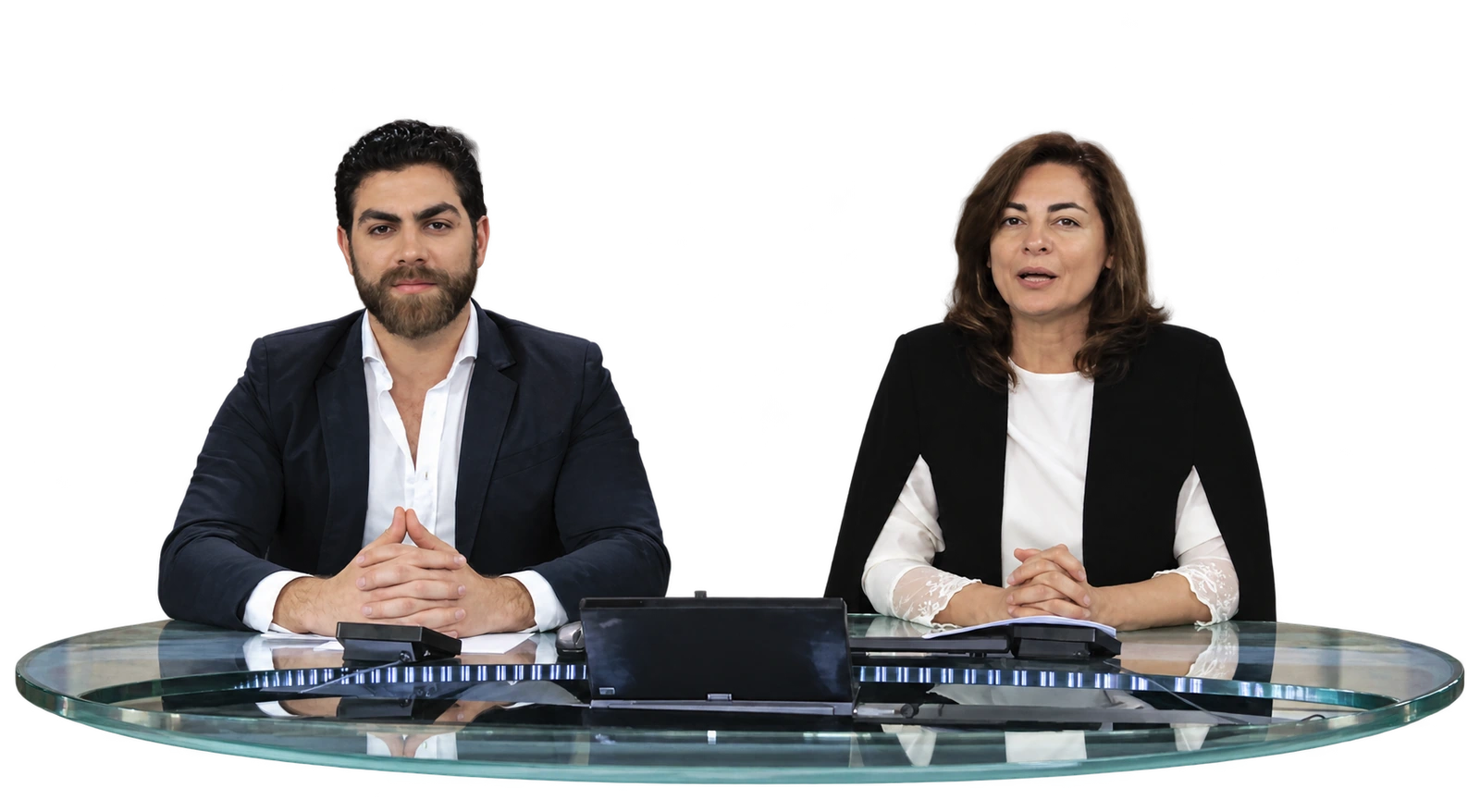
The marketplace satire draws on citizenship-by-investment programmes, global taxation and multiple residencies, alongside technological change and globalization. Customizable belonging raises questions about loyalty and identity, about who can gain access to resources and mobility, and about whether the market widens or reduces inequality.
Across installations, digital projections and participatory experiences, the work places inherited institutions beside new authorities and services. Its dystopia concerns how belonging, power and protection are organized across those systems.
Cooperation: the CPCU
Fictional institutional voice
The Concord for Post-National Cooperation and Understanding (CPCU) is an independent, neutral facilitator connecting Post-Nations and their citizens. It offers shared services and spaces for dialogue, cooperation and innovation while respecting each jurisdiction’s autonomy. It does not govern members or mediate their disputes.
Operating as a semi-Post-Nation, the CPCU owns and controls the territories, buildings and digital platforms it occupies. This arrangement secures independence from any single Post-Nation. Its stated principles are neutrality, transparency, fairness and respect for diverse values.
Artist commentary
The CPCU’s promise of neutrality sits beside its control over the places and platforms where cooperation happens. The institution can disclaim governing authority while setting the conditions for using its facilities.
Transfer, multiple citizenship and asylum
Fictional institutional voice
Citizenship may align with a member’s values, aspirations and contributions. A person can apply to transfer to a new Post-Nation while relinquishing the previous affiliation, acquire additional citizenships where permitted, or seek asylum in cases of conflict or restrictions. Each pathway follows the conditions of the jurisdictions involved.
Post-national jurisdictions
Fictional institutional voice
Birth, descent, residence, shared faith, contribution and subscription can establish affiliation under different jurisdictions. Benefits and responsibilities remain specific to the issuing institution.
The real experiments that informed these systems are discussed in Precursors.
Photos
Collapsed world, withered branch and incomplete loading sequence · Post-Nations
Source: Post-Nations · revised visual identity
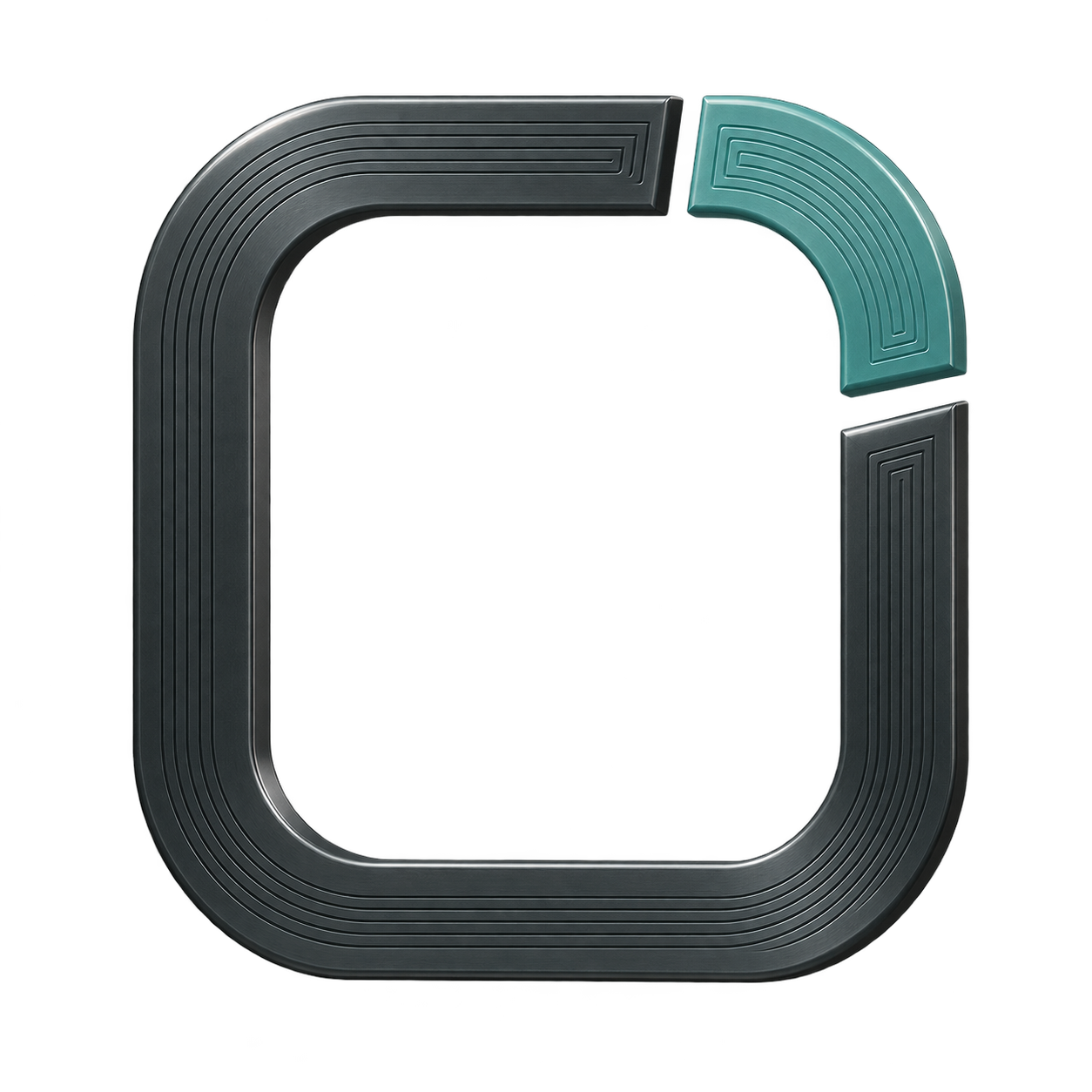
Syntis Nova · emblem from the fictional institution
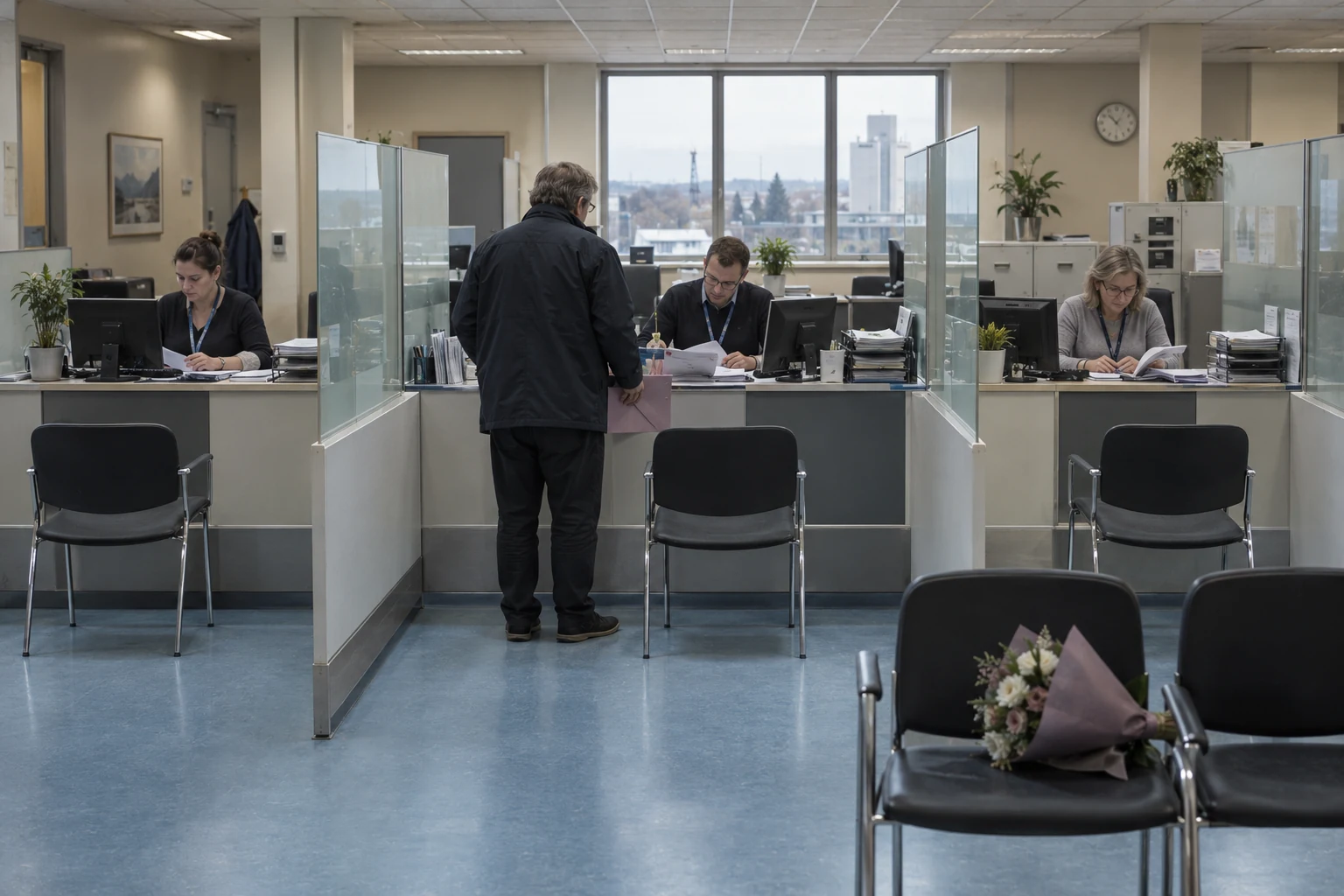
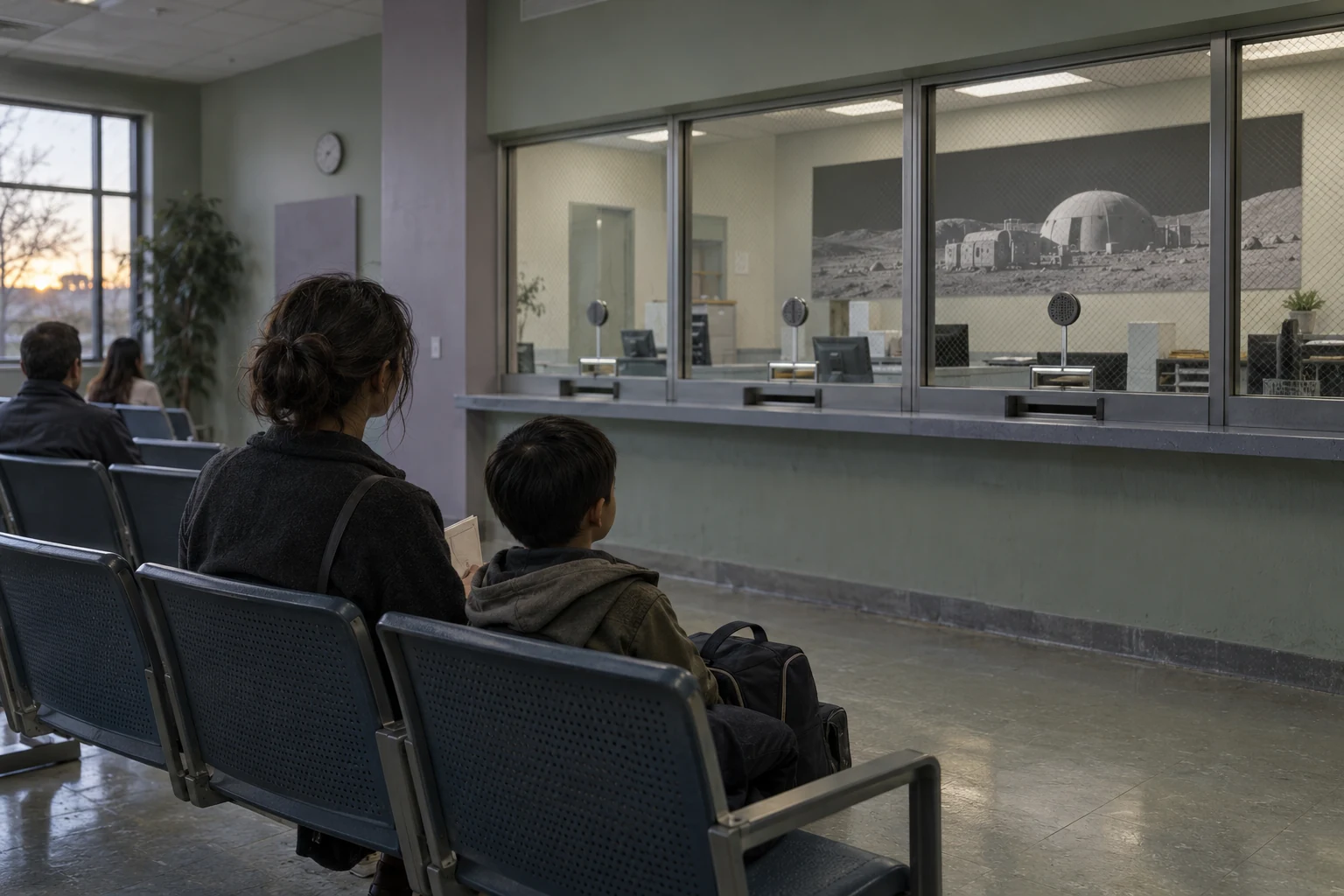
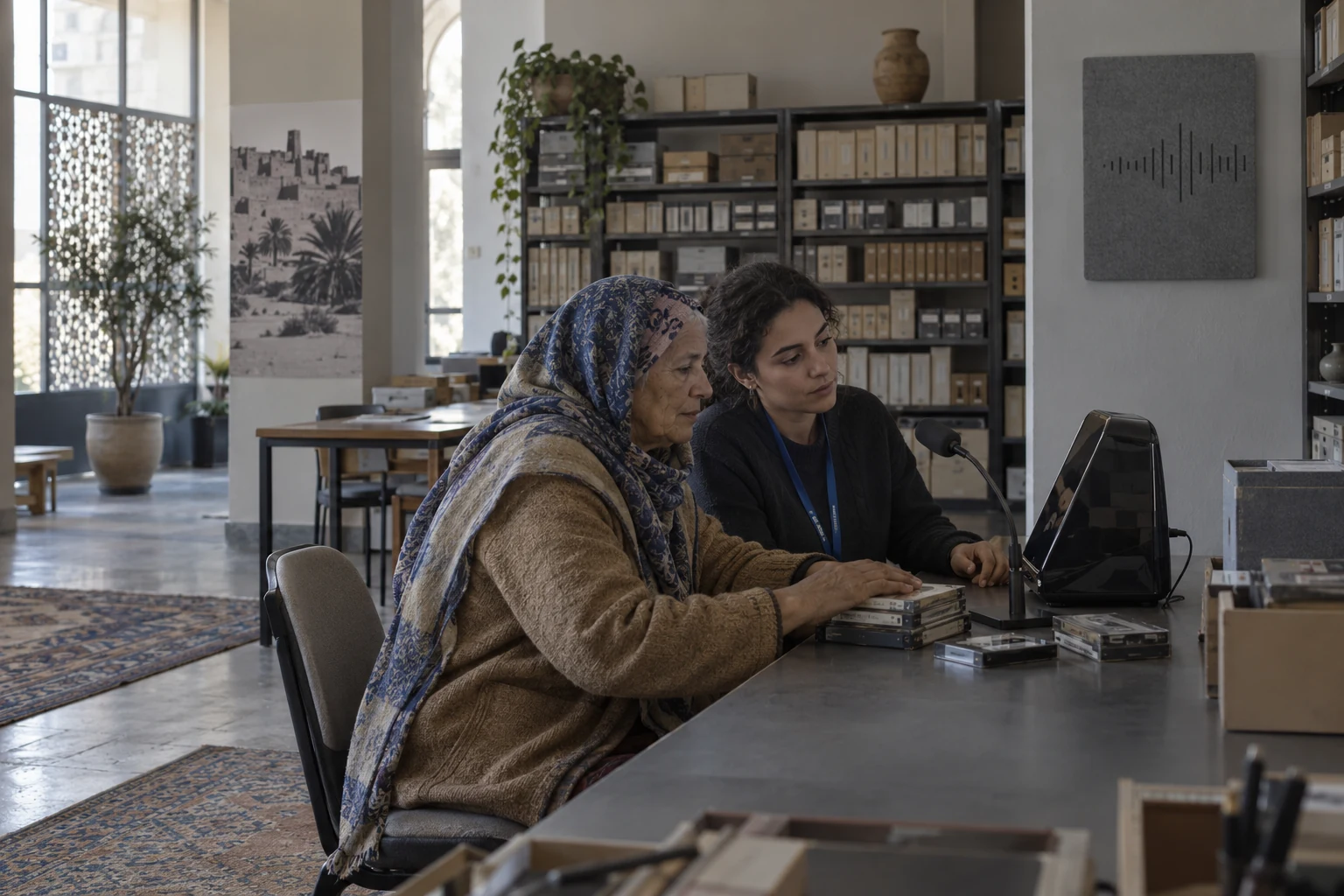
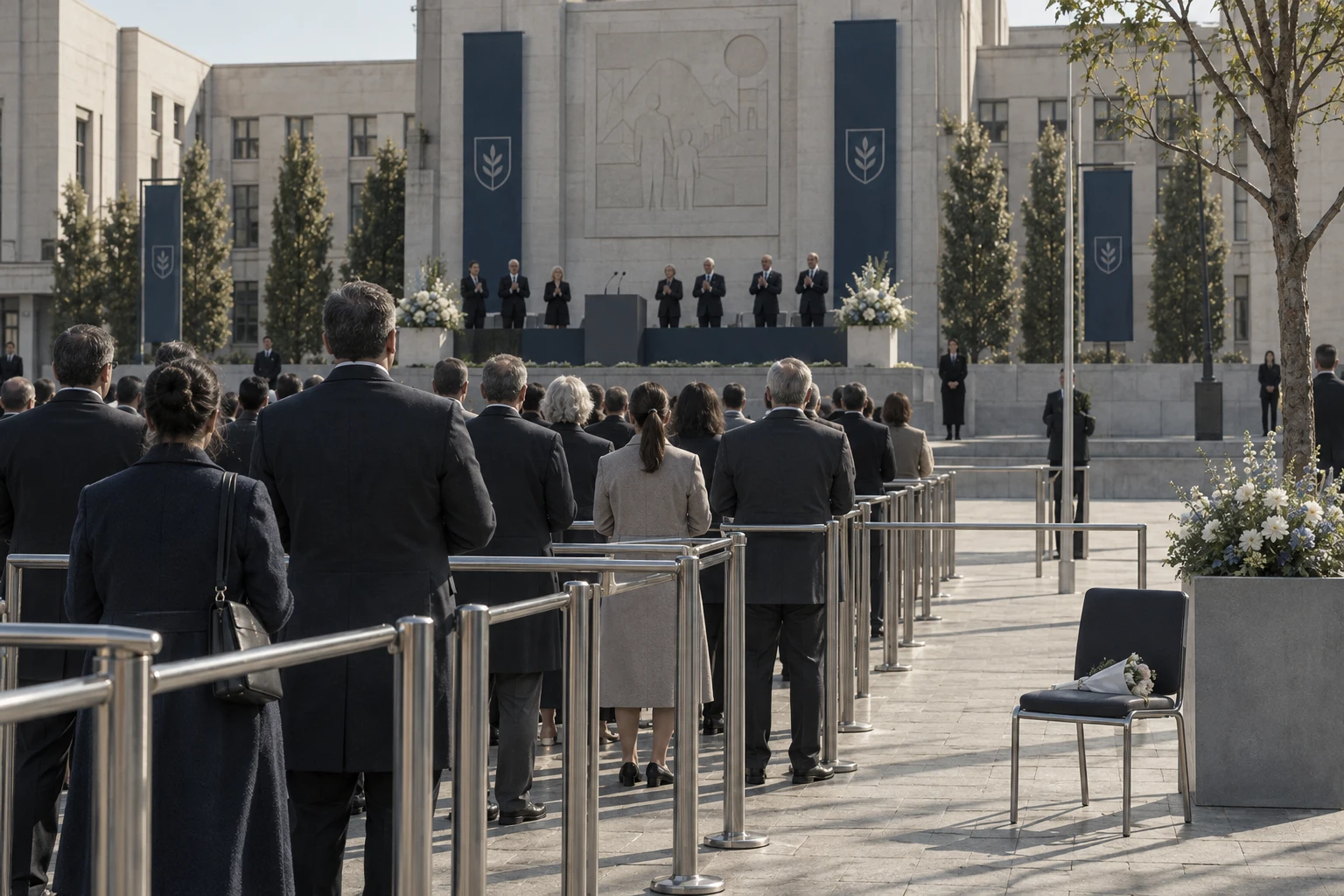
IMAGE ARCHIVE / SEVEN AUTHORED SCENES
Photographs from a year that has not happened.
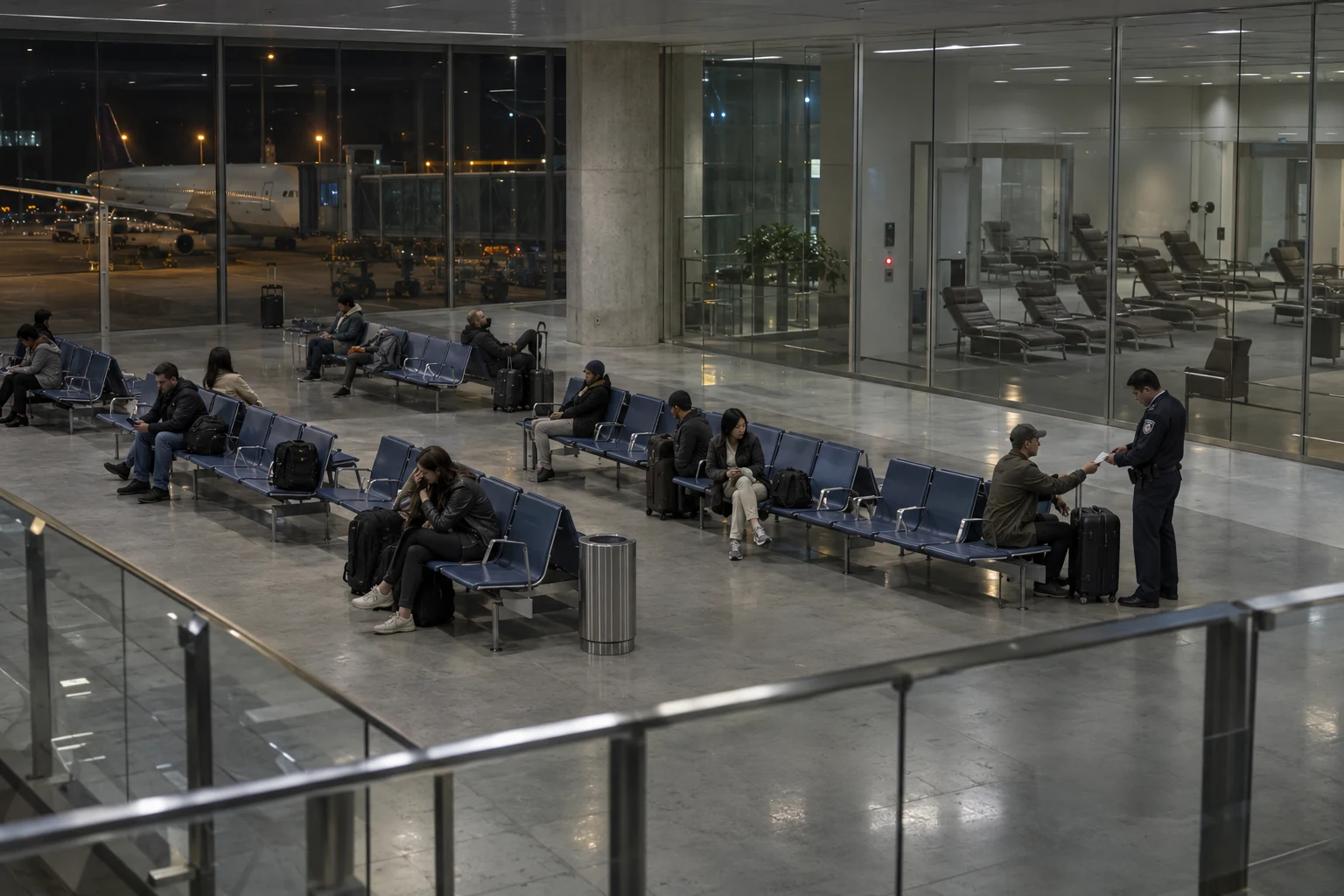
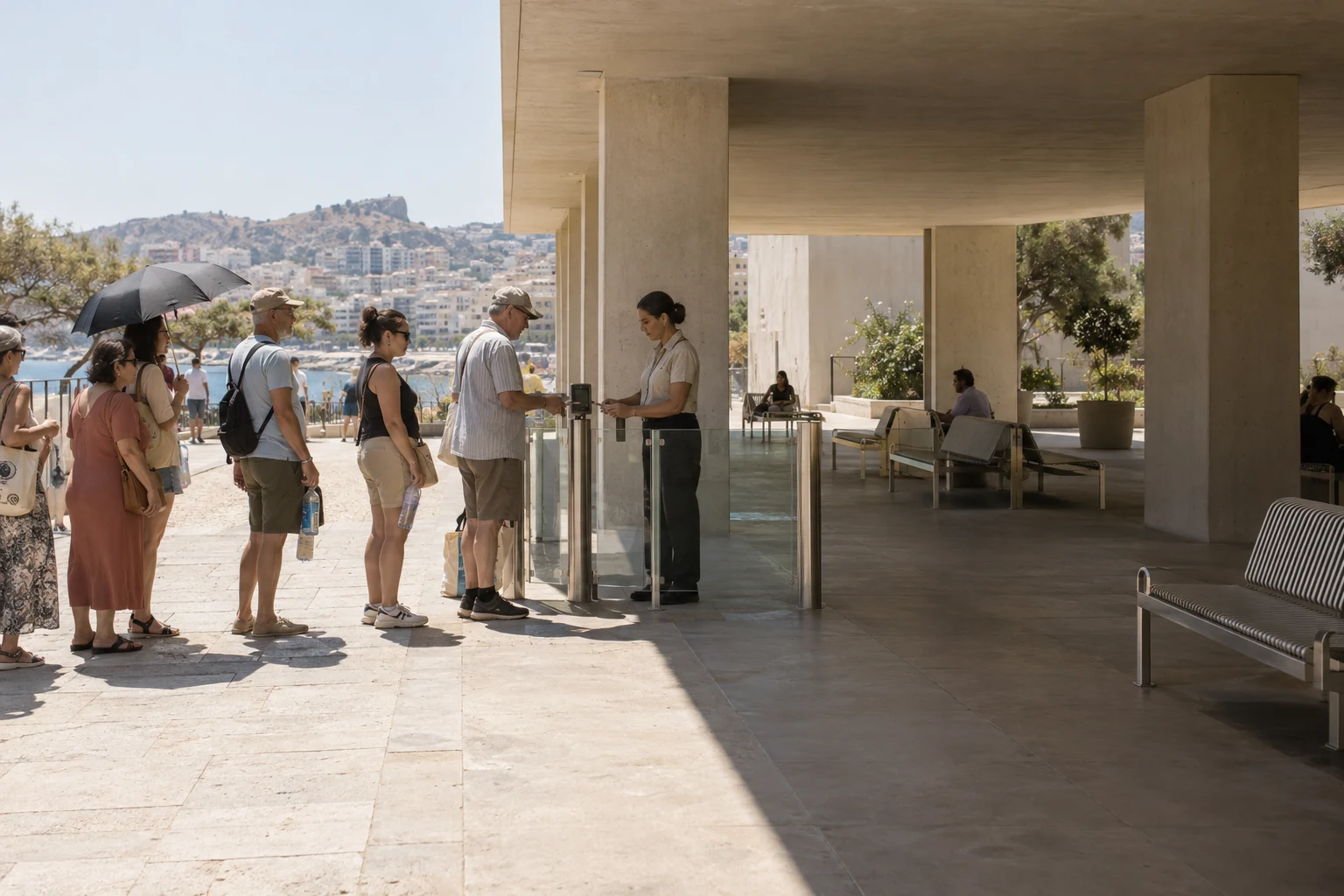
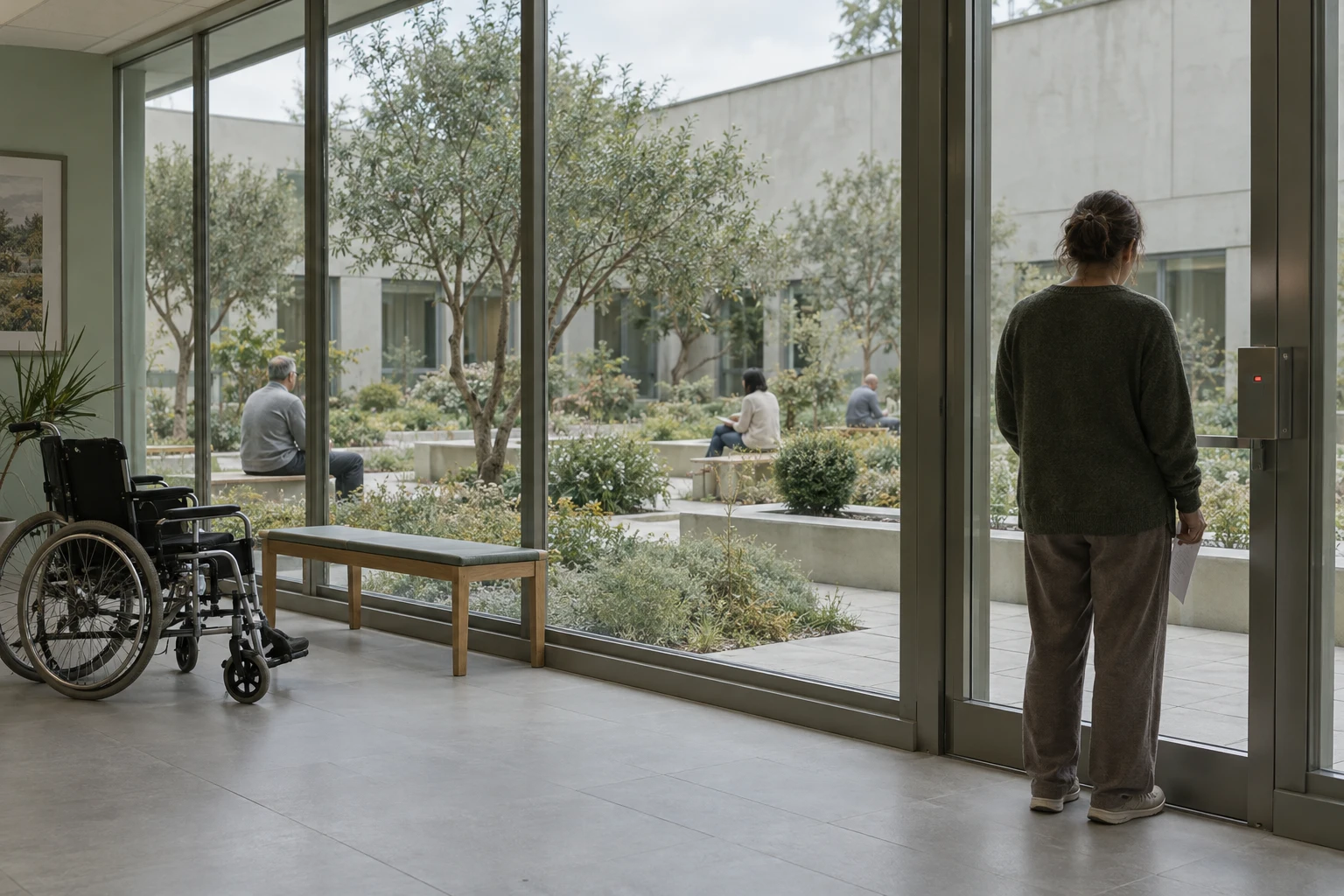
These images were generated for the artwork. They depict invented events in 2036, not documentary evidence of real people or places. Their ordinary institutional appearance is part of the fiction: the absurd policy has already become someone’s daily life.
MeridiaEastern transfer terminal / accommodation register closedAureliaWestern cooling district / refuge boundaryParallaxSuccession office / records retained, estate inaccessibleSyntis NovaEarth-side admission office / four authorizations pendingAmazraRegional language house / voice verification unresolvedAegisAegis / Public Safety Day / ceremonial enclosureEudaimoniaEudaimonia / supervised recovery residence / garden access


 Ukraine
 Syria
 Ukraine
 Beirut
 Lebanon
 Lebanese mountain municipalities
 Gaza
 Palestinian communities
 Lower Tigris–Euphrates






 Rohingya communities
 Armenia
 Western Sahara
 Hong Kong
 Belarus
 Belarusian exile
 Afghanistan
 Pacific island communities
 Small-island states
 Pacific coastal communities
 Gulf cities
 Gulf cities
 Ireland
 Punjab
 Yiddish institutions
 Finland
 Derna
 High Atlas
 Syria
 Lower Mekong
 European Arctic
 Arctic and cross-border navigation infrastructure
 Arctic monitoring stations
 Baltic region
 European industrial belts
 Amazon basin
 Asian and European industrial repair corridors
 Red Sea



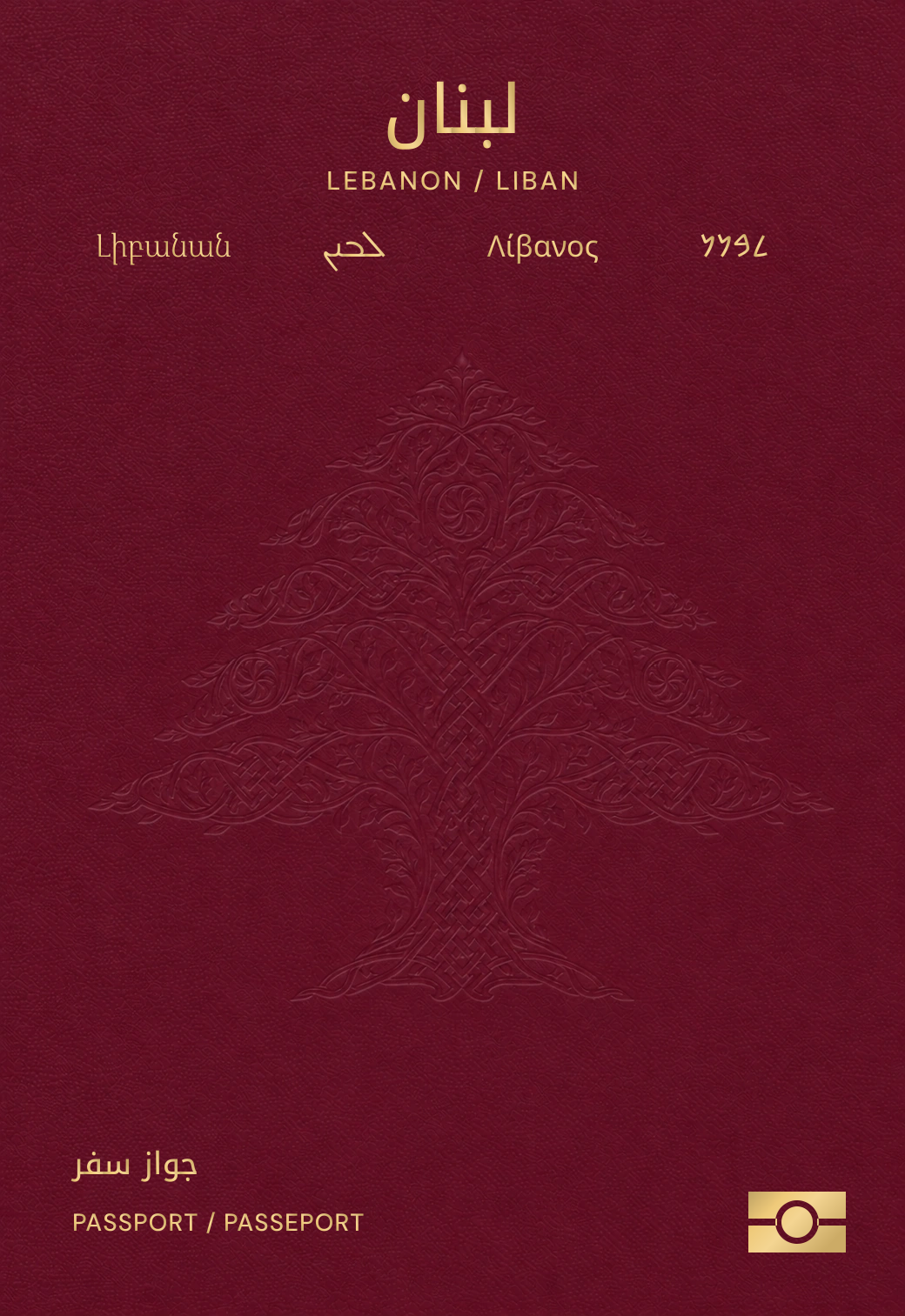
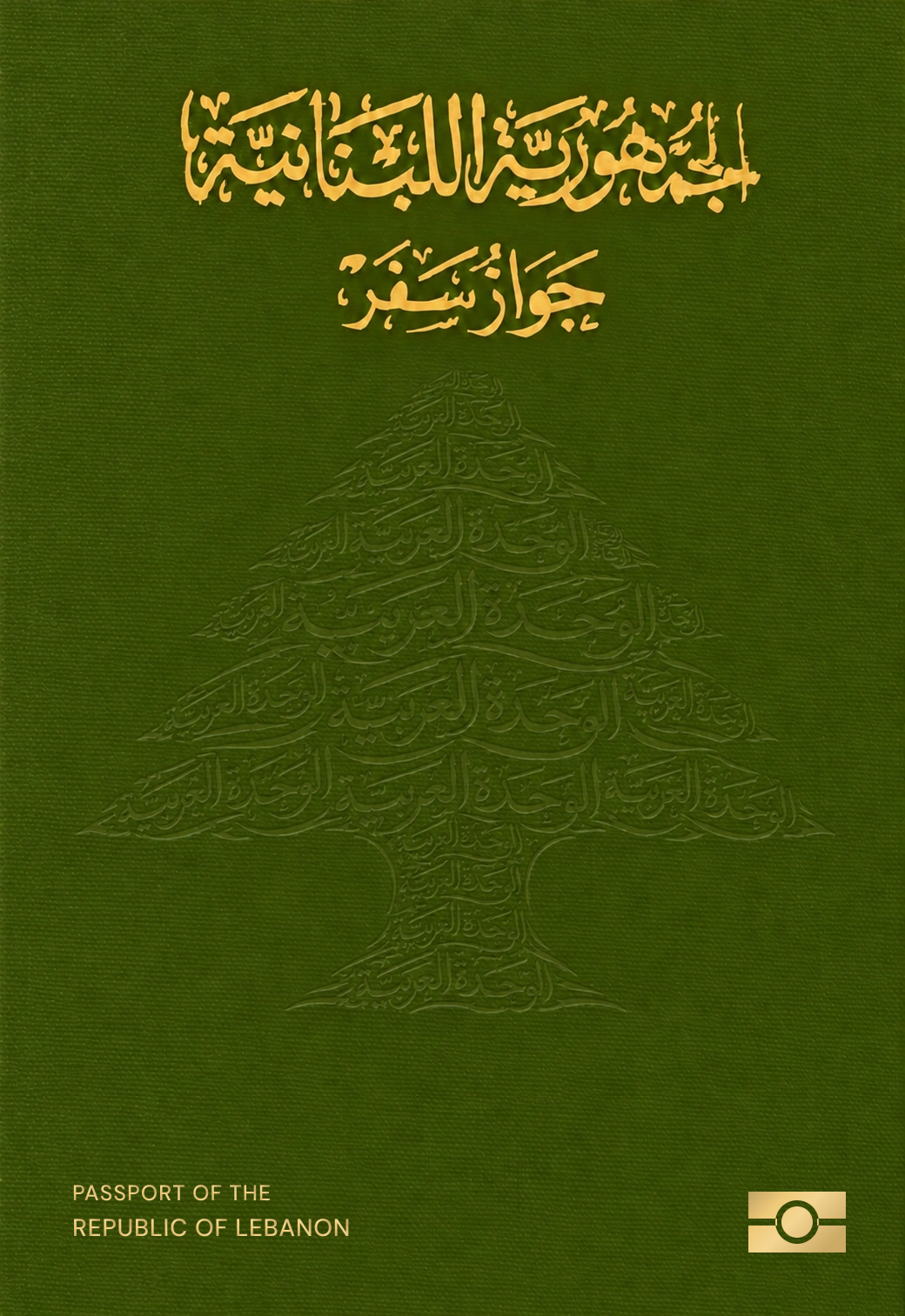
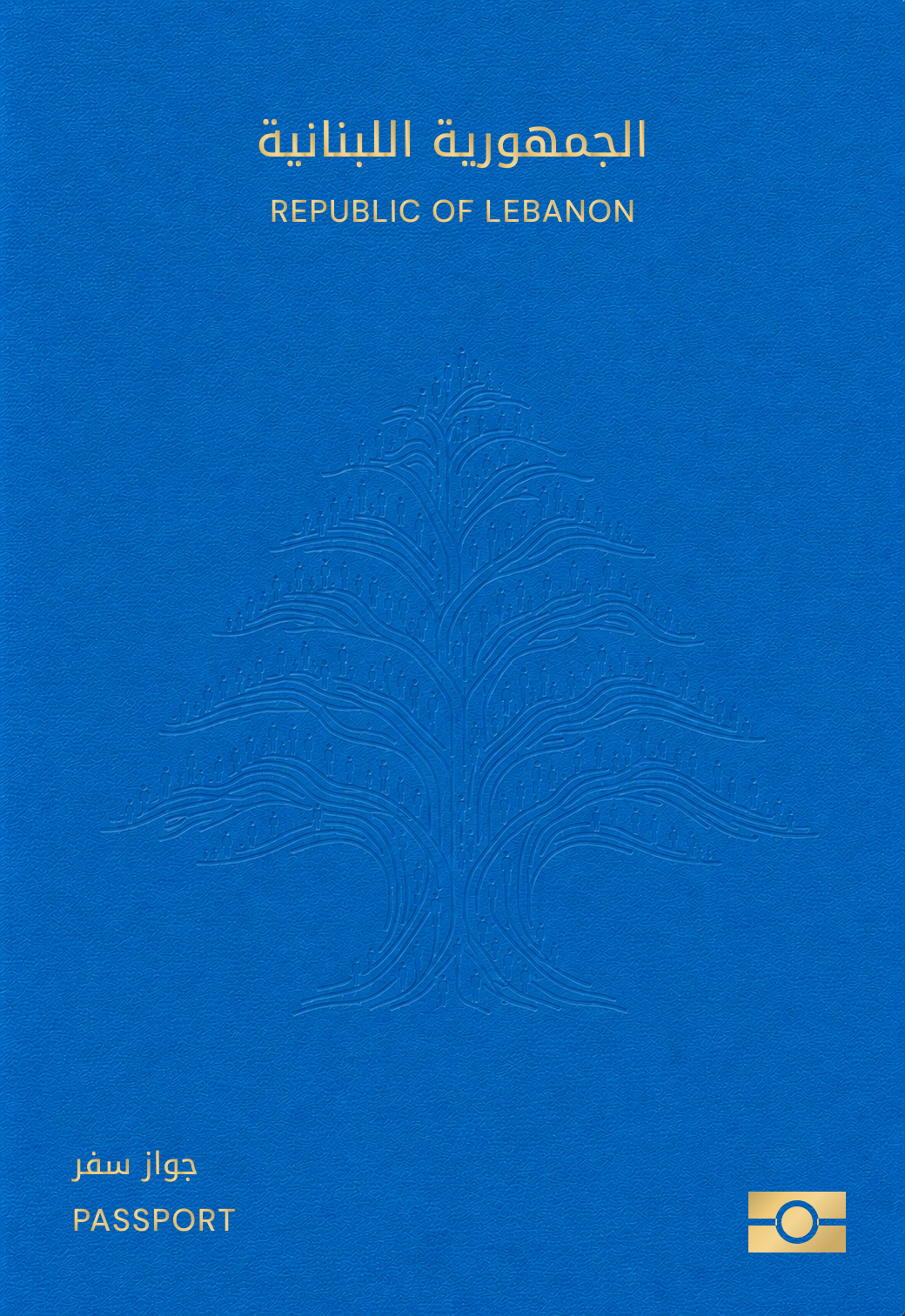





Artist commentary
The marketplace satire draws on citizenship-by-investment programmes, global taxation and multiple residencies, alongside technological change and globalization. Customizable belonging raises questions about loyalty and identity, about who can gain access to resources and mobility, and about whether the market widens or reduces inequality.
Across installations, digital projections and participatory experiences, the work places inherited institutions beside new authorities and services. Its dystopia concerns how belonging, power and protection are organized across those systems.