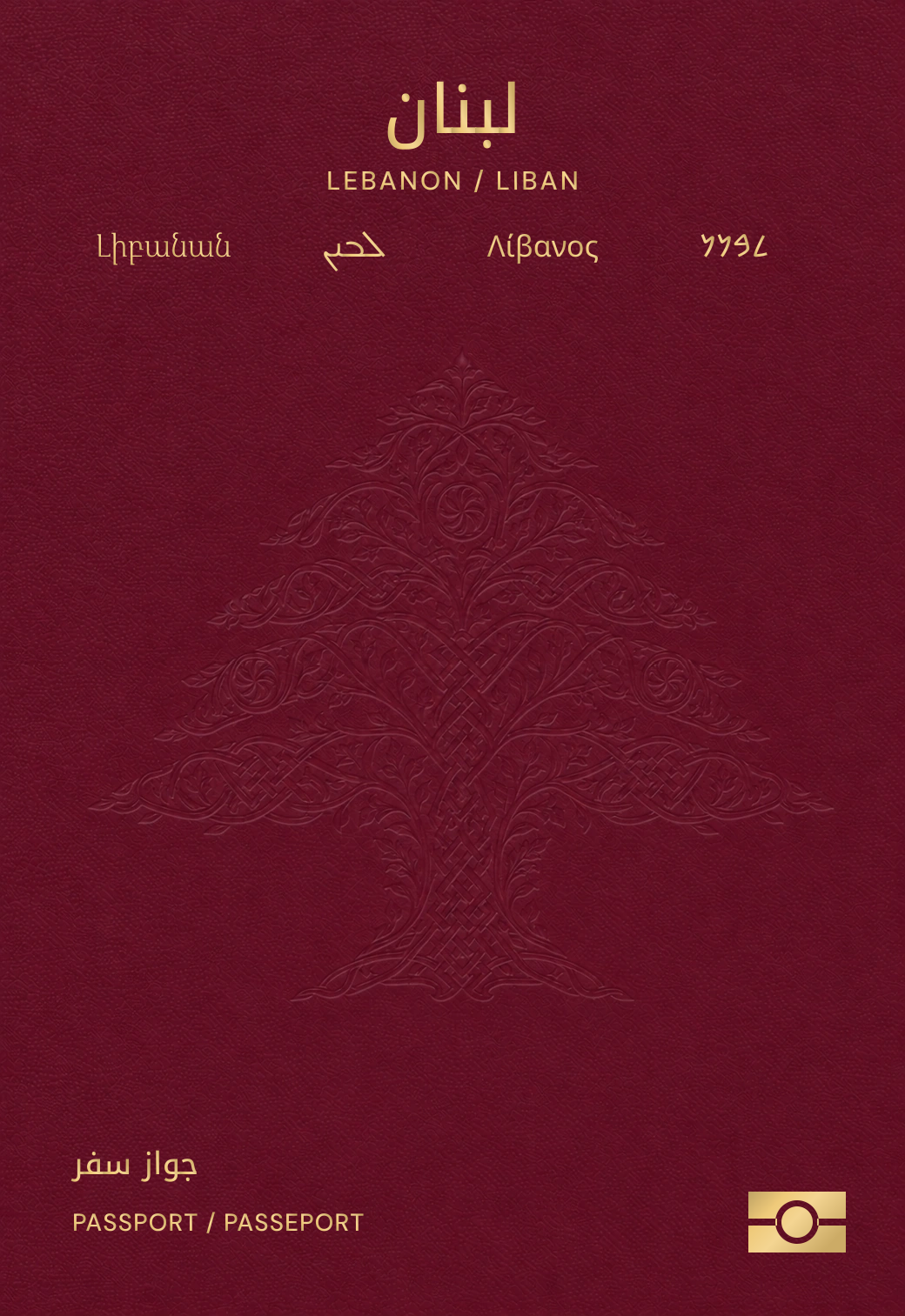
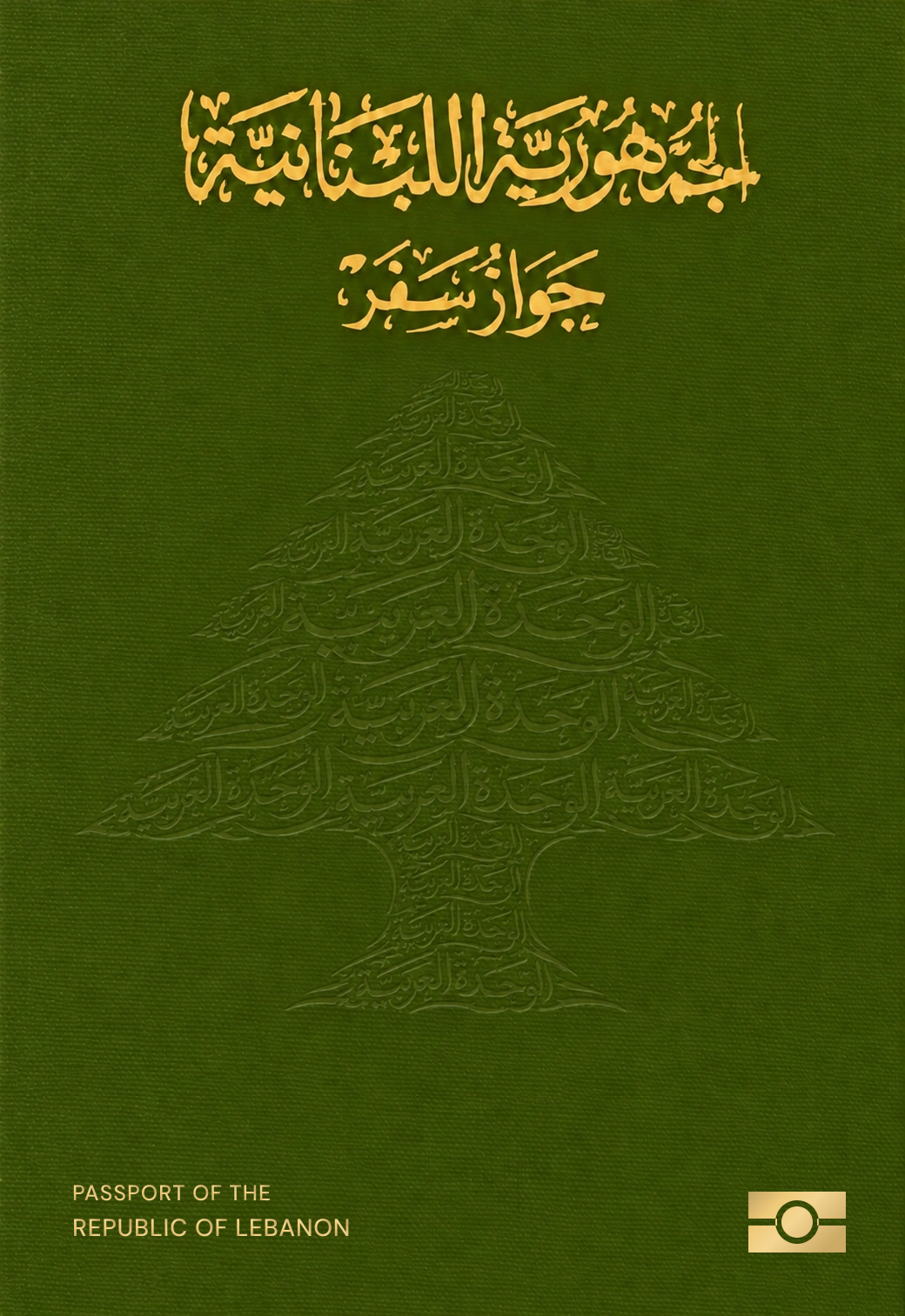
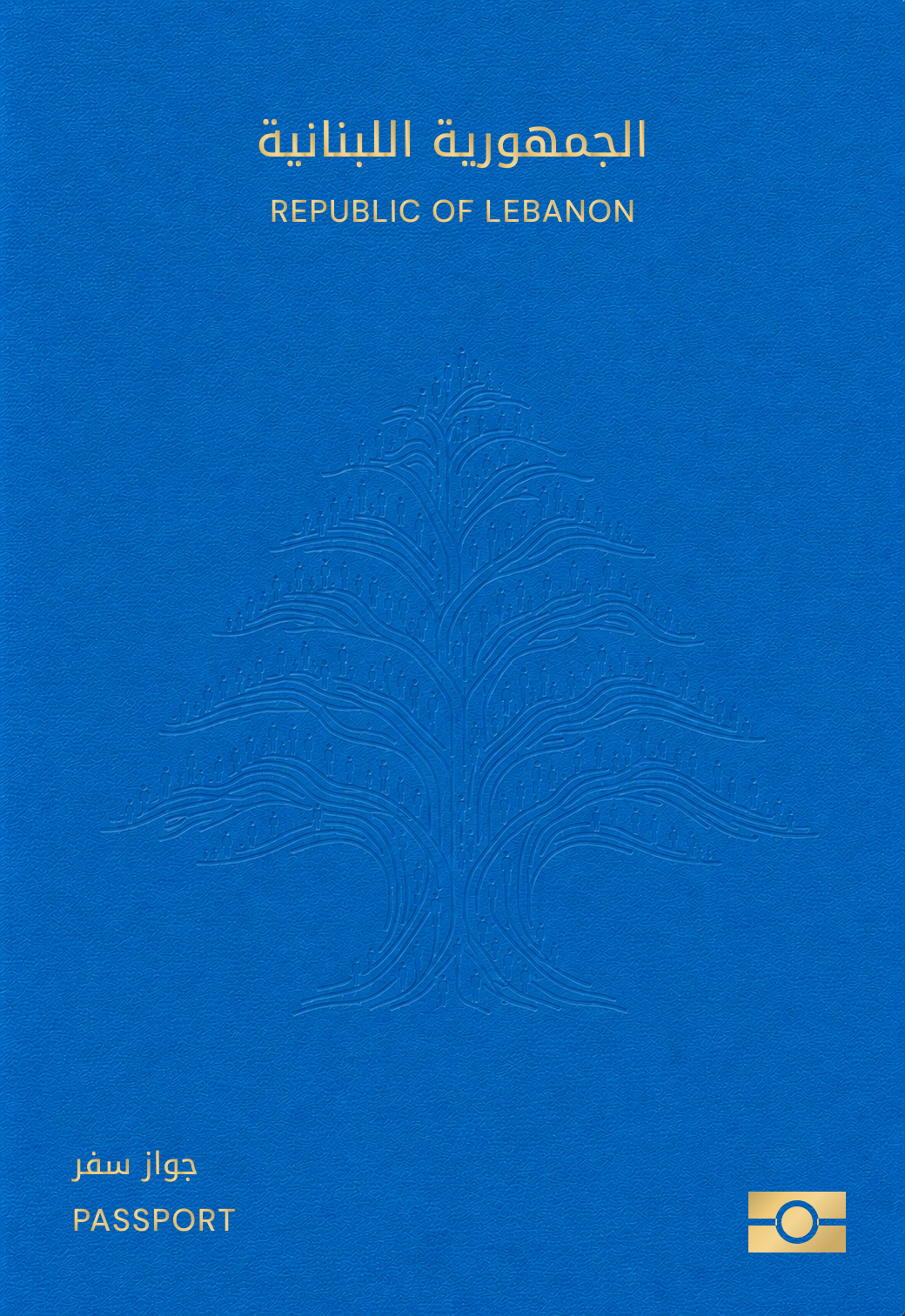
Alex developed three imagined Lebanese passports around competing ideas of nationhood. The work uses selections of images, historical figures and events to ask whom a national document represents and what it leaves out.
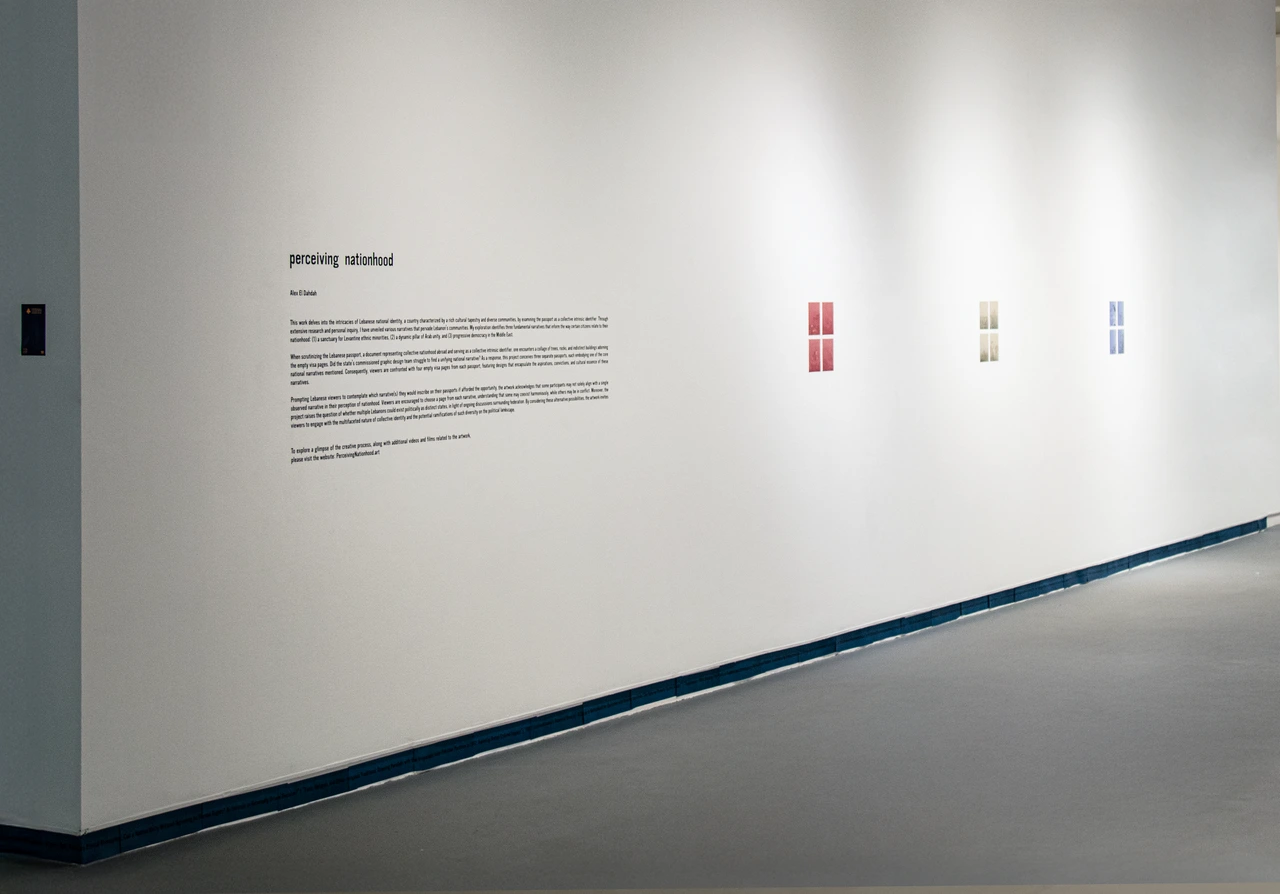
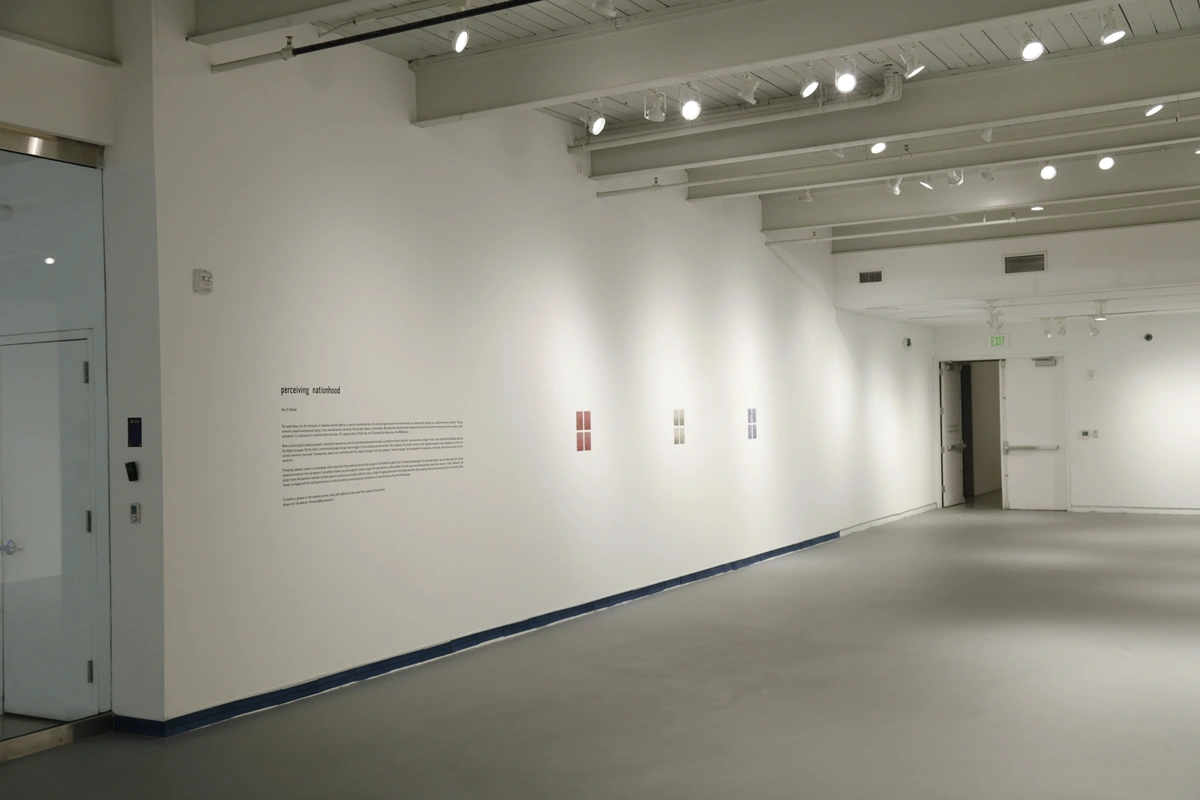
The project brings together survey responses, archival research and political theory. The 2023 installation combined thirteen metallic-luster prints with a fifteen-foot printed text band about partitions and separations.
The installation was presented in Alex’s Mount Royal thesis exhibition at MICA. The online edition preserves the original prints and distinguishes them from the separately dated digital cover and light studies.
By centering the Lebanese passport—an object engineered to broadcast a single, frictionless narrative—Perceiving Lebanese Nationhood exposes a republic sustained by several, often rival, origin myths. The official booklet’s tranquil vignettes of cedar groves, coastal cliffs, and Mount Lebanon facades soothe the eye with a tidy geography, yet they leave its people—and their divergent self-understandings—unseen.
This is a passport of territory, not of nation—yet it is the nation that travels, not the land.
The question behind the work
Confronting this design error, the project poses a deceptively simple question: What should a passport for the Lebanese nation—rather than merely for the Lebanese state—look like?
Extensive primary research—including a wide-ranging survey that asked, for instance, “Do you feel pride in your Lebanese identity? If not, do you nonetheless feel responsible for Lebanon’s social fabric? … What events or figures would more powerfully symbolize the nation?”—yielded no single, satisfactory answer.
Holding different narratives together
Unable to distill one definitive design, the artist chose not to filter the findings, but instead placed them on view—inviting each viewer to search for pages that might anchor a common Lebanese passport, or to imagine whatever further exercises the material inspires.
Archival work, political theory, and survey data reveal a dilemma: Does the Lebanese polity still offer a common shelter of meaning, or merely corral competing narratives beneath one roof? Is Lebanon a unified nation, or a constellation of intersecting sub-nations—and, if the latter, can that constellation ever agree on a shared image?
Three overlapping visions
To test the question, the artist distilled three overlapping visions into three parallel passports: Lebanon as a haven for regional ethnic minorities; Lebanon as a linchpin of Arab unity; Lebanon as a beacon of progressive democracy in the Middle East.
These narratives behave like tectonic plates—sometimes interlocking to form stable civic ground, sometimes grinding apart to expose fault lines that resist alignment.
Perceiving Nationhood invites viewers to trace both the seams of convergence and the fractures of tension that shape contemporary Lebanese experience.
The strip and the specter of separation
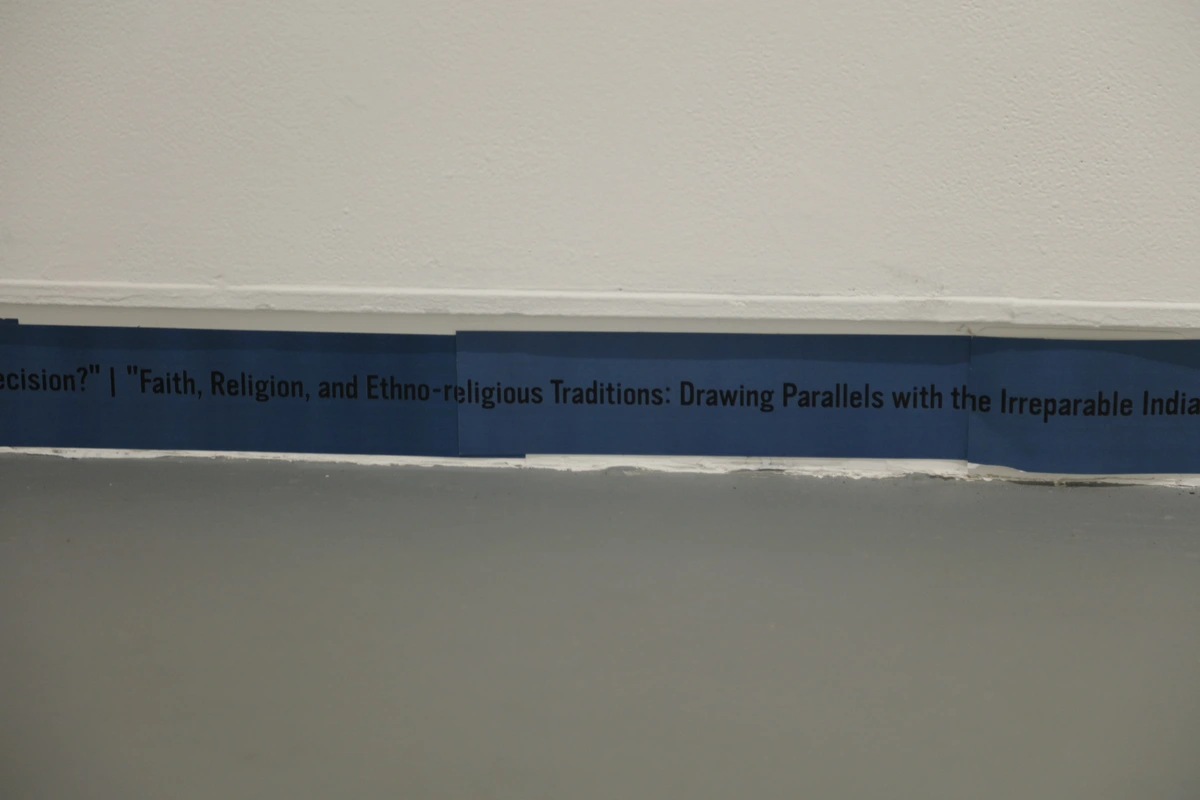
A news-ticker-style text frieze runs along the gallery’s base, its headline cadence cataloguing historic partitions and secessions. This element spotlights the specter of separation—imagining how adherents of the three narratives might fracture into distinct states, or otherwise reconfigure.
It asks which splits arrive too late and wound, which unfold by design, and on what grounds societies decide to divide.
The work does not necessarily advocate disunion; rather, it challenges Lebanon to reckon with the ever-present possibility of reshaping its structure—or to affirm the current form and claim it as a nation.
Perceiving Lebanese Nationhood surfaces these questions at a moment when Lebanon has yet to conduct a shared reckoning with its civil-war past—or even to teach that conflict from a single textbook.
Perhaps it must first accept that the war cannot be narrated from one frame alone.
By reframing the cultural mosaic, the project situates live debates—from constitutional reform to revived federalist proposals—within a broader, shifting meditation on what “nationhood” can be when divergence is not evaded but made visible, legible, and, perhaps, shared.
The passport as a state document
The passport as a state document and the three political identities explored in the work.
Perceiving Nationhood Passports uses the passport as a familiar state object through which to examine how a nation describes itself.
The official Lebanese passport appears alongside three imagined alternatives. Their shared format holds different accounts of who belongs, which histories matter, and what a nation chooses to show.
Three visions, one format
The imagined passports examine Lebanon as a haven for regional ethnic minorities, a center of Arab unity, and a progressive democracy. The historical strip brings the possibility of separation into the same installation.
Making the work
The printer’s memos
The fictional commission gave each printer’s memo a particular addressee: a graphics firm explaining its design choices to the Lebanese government. Each memo adopts the rhetoric of the constituency behind that passport, translating the research into the language of an official document.
From prints to passports
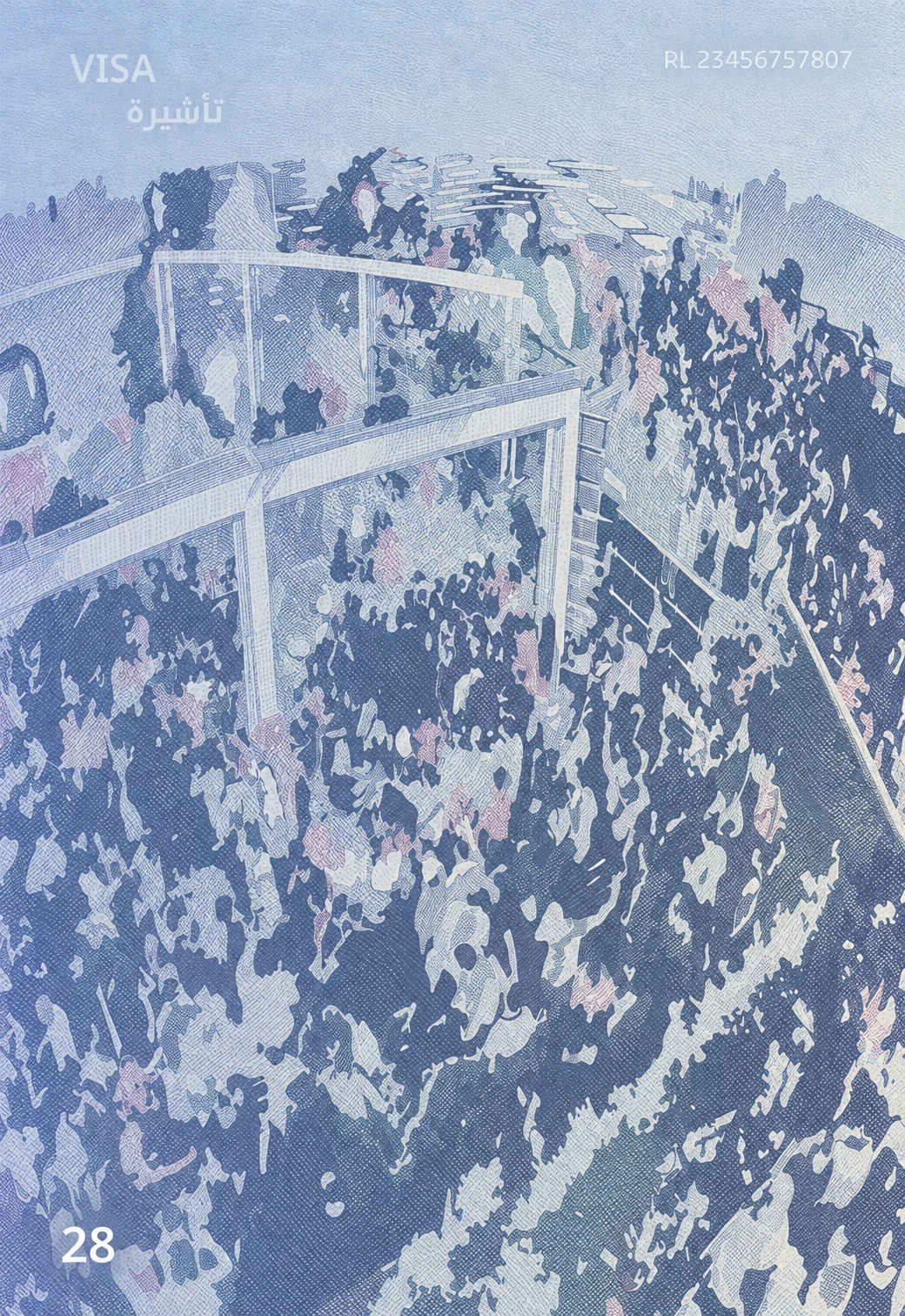
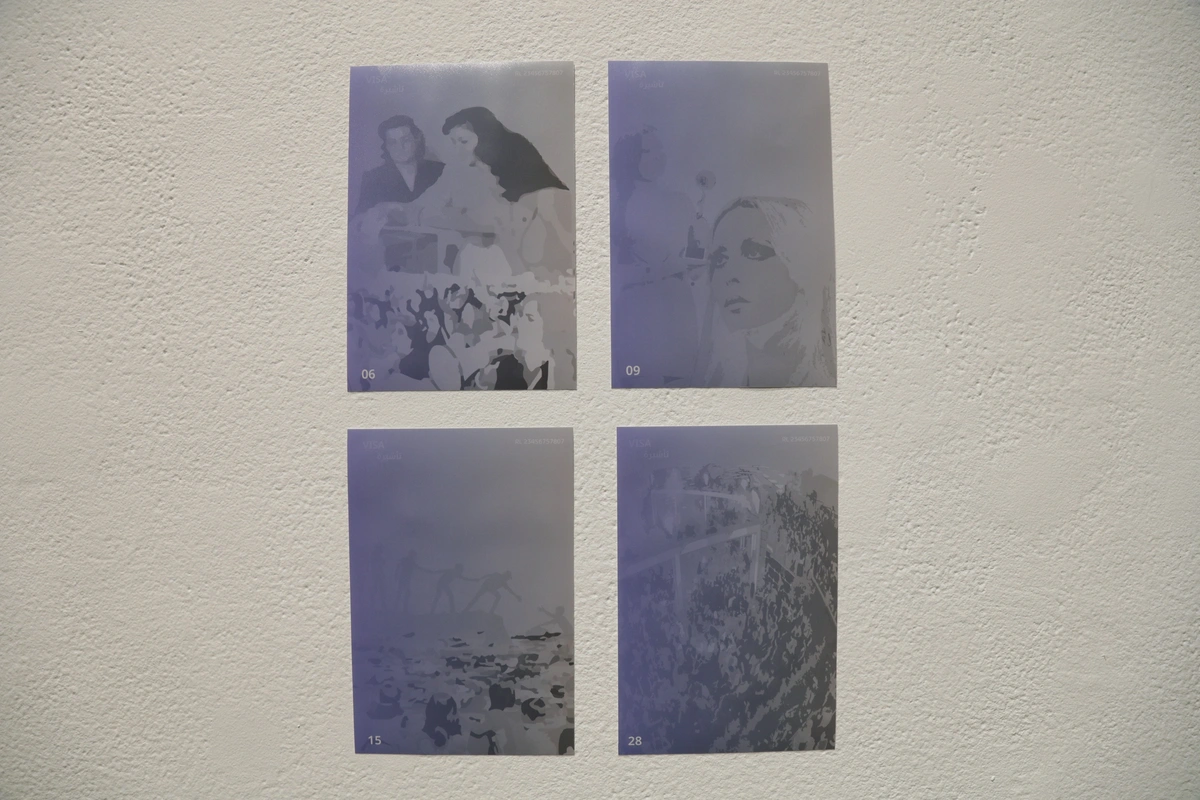
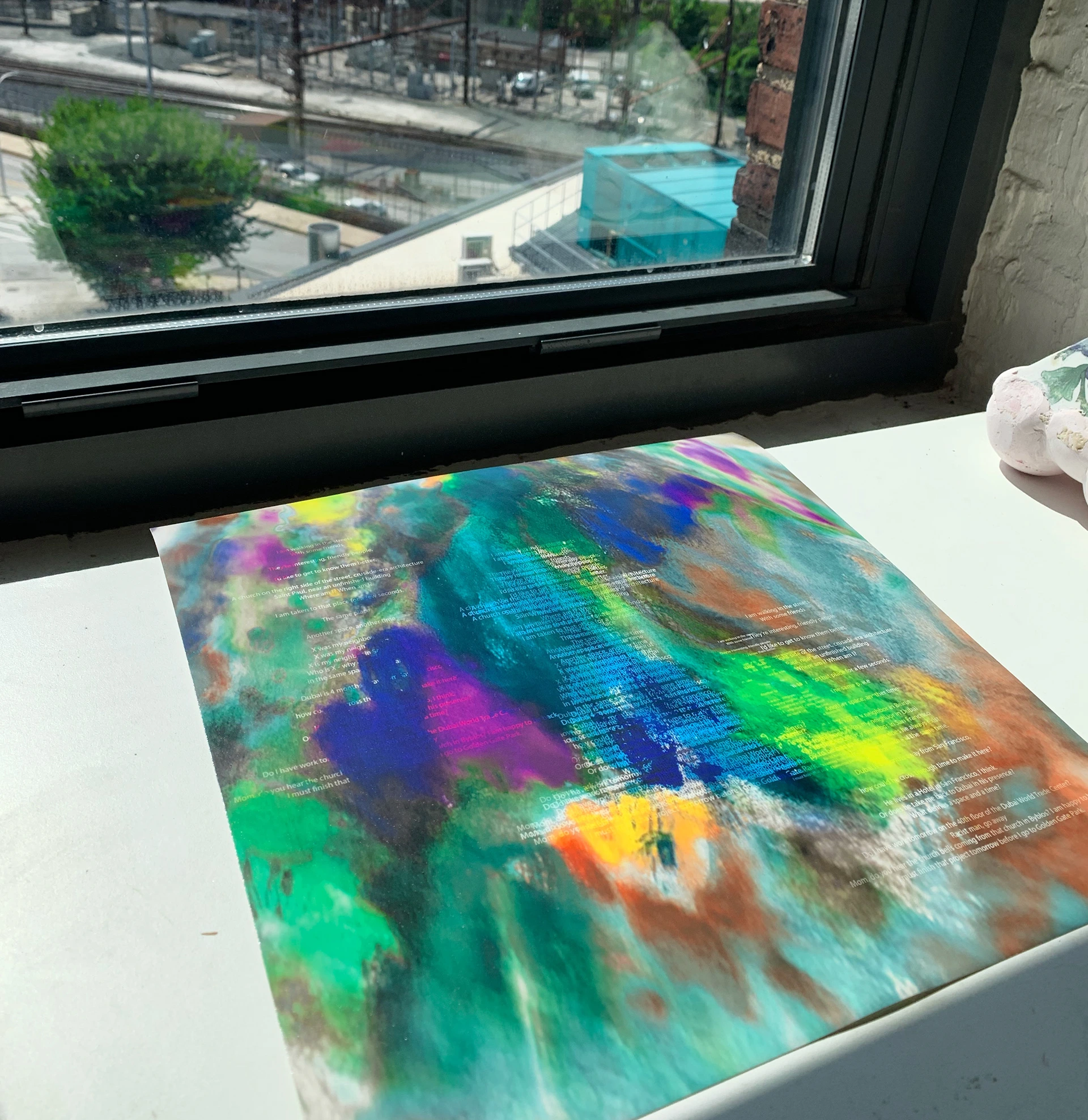
The visa-page designs were made as individual prints. Metallic-luster paper brings a reflective surface to the line work, while the continuous historical strip carries the text through the exhibition space.
On screen, the pages are gathered into passports. Engraved covers, reflection and fluorescent overprints give each book a material presence; the page notes bring its imagery, text and sources into view.
Prints and materials
First exhibited in Baltimore, Maryland, in May 2023, the installation brings the passport prints and the historical strip into one space.
Thirteen prints
Twelve visa-page designs in three groups of four, plus one facsimile of the official Lebanese passport’s front cover. Colored metallic-luster pigment prints, each 4.921 × 3.475 inches.
The prints approximate Lebanese visa-page dimensions, with the metallic-luster surface enhancing line work through reflection. A proposed physical passport edition would use less-opaque archival pigment printing.
The historical strip
One historical strip
A colored laser print, 15 feet × 3.5 inches, running continuously along the skirting board as a news-ticker-style text band.
The wall sequence begins with ten inches of blank surface, followed by the official-cover facsimile. A fifty-inch interval leads to the introductory vinyl text; a second fifty-inch gap leads to the first passport group. Uniform fifty-inch spaces separate the three groups.
Photos
Installation view
Installation view · Perceiving Nationhood Passports, 2023Printed visa-page artwork displayed in the galleryThe original 15-foot text band along the gallery base